

Honey bees
Honey bees, scientifically known as Apis mellifera, are remarkable insects renowned for their vital role in pollination and honey production. Originating from Europe, Africa, and Asia, the honey bee was introduced to North America by European settlers in the early 1600s. Since then, they have become an integral part of agriculture and ecosystems.
Honey bees are social insects that live in colonies, typically consisting of a queen bee, male drones, and female worker bees. They build intricate wax honeycombs in hives, where they store honey and raise their brood. These insects diligently forage for nectar and pollen, playing a crucial role in pollinating various crops, fruits, and wildflowers.
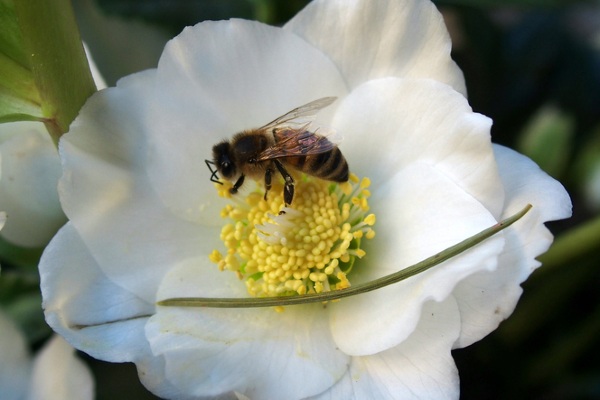
What does a honey bee look like?
Honey bees have a few physical features that make them easy to recognize and identify.
- Size: A worker honey bee is slightly smaller than drones, but both measure between one-half and three-quarters of an inch. The queen is slightly larger, typically ranging from three-quarters of an inch to one inch.
- Body: They typically have a slender body covered in fine hairs.
- Color: Worker and drone honey bees are golden-yellow, with alternating darker bands of brown. The queen has golden-colored hairs on her body and a tapered abdomen that makes her appear more wasp-like.
Types of honey bees
Honey bees exist as a single species, but there are several distinct subspecies that have their own unique characteristics and adaptations. Some of the most well-known honey bee subspecies include:
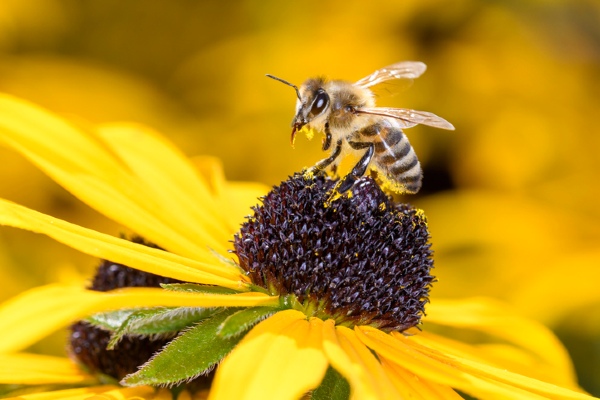
Western or European honey bees (Apis mellifera) are incredibly common in the United States and are renowned for their vital role in pollination and honey production. They are highly adaptable and thrive in diverse environments. Western honey bees are known for their gentle temperament, honey production, and large colony sizes.
The Japanese honey bee (Apis cerana japonica) has a unique defensive behavior against predatory giant hornets. When threatened, these bees form a tight ball around the intruder, raising the temperature to lethal levels through collective heat generation. Compared to Western honey bees, Japanese honey bee colonies tend to be smaller and may nest in cavities within trees or construct exposed nests in shrubs.
How a honey bee colony is organized
A honey bee colony consists of three types of individuals: the queen, worker bees, and drones. Each plays a specific role in the colony's survival and reproduction.
- Queen: The queen bee is the reproductive female responsible for laying eggs and maintaining the colony's population. She mates with drones early in life and stores their sperm to fertilize eggs as needed. The queen emits pheromones that regulate the behavior and development of other bees in the colony.
- Worker bees: Worker bees are non-reproductive female bees that perform various tasks essential to the colony's function. This includes nursing the brood, foraging for nectar and pollen, building and repairing honeycomb, and defending the hive.
- Drones: Drones are male bees whose primary role is to mate with queens from other colonies.
Honey bee colonies prefer to live in enclosed spaces. They may nest inside tree cavities, rock crevices, and other natural cavities that offer protection from predators, weather, and other disturbances. They’ll also nest in human-made structures such as wall voids and attics.
Honey bees prefer habitats with abundant sources of nectar and pollen. Access to water is also essential for honey bee colonies, as they require water for hydration, cooling the hive, and diluting stored honey for consumption.
Honey bee life cycle
The honey bee life cycle consists of four main stages: egg, larva, pupa, and adult.
- Egg: The queen bee lays eggs within individual cells of the honeycomb. Fertilized eggs develop into female worker bees or future queens, while unfertilized eggs develop into male drones.
- Larva: After a few days, the eggs hatch into larvae. Worker bees feed the larvae a mixture of royal jelly, pollen, and honey.
- Pupa: Once the larvae have grown sufficiently, they enter the pupal stage. During this stage, they spin a cocoon around themselves and undergo metamorphosis. They develop adult features inside the cocoon, such as wings, legs, and eyes, while remaining immobile.
- Adult: After about two weeks, the mature bees chew their way out of their cells. Depending on their sex and role within the colony, they may be workers, drones, or queens.
The entire life cycle from egg to adult takes about 21 days for worker bees, 24 days for drones, and 16 days for queens, although this can vary. Worker bees typically live for about four to six weeks during the active foraging season. Drones have a lifespan of about eight to 10 weeks. Queens have the longest lifespan, ranging from one to five years.
Honey bee behavior
Honey bees are generally not aggressive unless they perceive a threat to their hive or colony. They may become defensive and exhibit aggressive behavior in response to disturbances such as loud noises, vibrations, or sudden movements near the hive.
Only female honey bees (workers and queens) are capable of stinging, and they will do so if they feel threatened. When a honey bee stings, it inserts its barbed stinger into the target's skin and delivers venom. The stinger remains lodged in the skin, and as the bee attempts to fly away, the stinger tears away from its abdomen, leading to the bee's death. The venom injected by the honey bee's sting contains various compounds that can cause pain, inflammation, and allergic reactions in some individuals.
How honey bees make honey
Honey bees make honey through a remarkable process of nectar collection, digestion, and hive processing. First, forager bees are sent to collect nectar from flowers using their long proboscis (tongue) and store it in a special compartment in their digestive system called the crop or honey stomach.
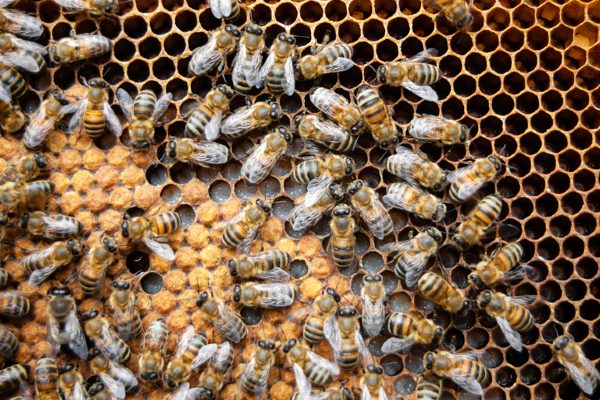
They bring the nectar back to the hive and pass it to worker bees (a process called trophallaxis), who add enzymes to break down the sugars in the nectar. The worker bees spread the nectar across honeycomb cells within the hive and fan it with their wings to evaporate the water.
As the water content decreases and the sugar concentration increases, the nectar gradually transforms into honey. Once the moisture content is low enough, the worker bees seal the cells with beeswax. The seal preserves the honey and protects it from moisture and contaminants.
Do honey bees still make honey in the winter?
Honey bees do not typically produce honey in large quantities during the winter. They rely on their stored honey to sustain the colony through the colder months. They conserve warmth by clustering in the hive around the queen and brood, vibrating their flight muscles to generate heat. They remain relatively inactive until spring.
The importance of honey bees
Honey bees play a vital role in the environment as pollinators, making them crucial to the reproduction of many flowering plants, including crops and wildflowers. Through pollination, they transfer pollen grains between flowers, enabling fertilization and seed production. This process supports plant growth, biodiversity, and ecosystem stability.
Beyond their ecological importance, honey bees also provide valuable products to humans, like honey and beeswax.
How can you help honey bees?
There are several ways you can help honey bees!
- Plant bee-friendly flowers: Bee-friendly flowers provide abundant sources of nectar and pollen for bees. This includes lavender, sunflowers, coneflowers, cosmos, and more.
- Avoid or minimize pesticide use: Choose organic or bee-safe alternatives to pesticides and herbicides, as many chemicals can harm honey bees and other valuable pollinators.
- Support local beekeepers: Purchase honey and other bee products from local beekeepers who practice sustainable beekeeping methods and prioritize bee health.
- Educate others: Raise awareness about the importance of honey bees and other pollinators and encourage others to take action to protect them.
- Get involved in conservation efforts: Participate in community-based conservation projects or support initiatives to preserve natural habitats and forage resources for honey bees.
Professional honey bee control
Honey bees are typically not considered pests when they are living in their natural habitat or managed by beekeepers. However, they can become a nuisance or danger when they establish colonies in or around structures around a home.
Terminix technicians and professional beekeepers are trained and equipped to safely locate and remove honey bee colonies without causing harm to the bees. These professionals also have the knowledge and experience to relocate honey bee colonies to safe and suitable environments. This approach to honey bee control helps preserve populations and supports pollinator conservation efforts.
In some areas, there may be regulations related to honey bee control without the assistance of licensed professionals. Hiring a reputable pest control company like Terminix ensures compliance with local laws and regulations and ethical beekeeping practices. If you’re concerned about bees on your property, schedule an inspection today.