Home Garden
Identifying honey bee nests around your home
Finding a bee nest near your home can be a bit concerning, as there are many different stinging insects. But don't worry, you can often figure out if it's a honey bee nest from a safe distance! There are key things to look for, like the bee behavior you observe, the type of nest they've built, and where it's located. Knowing these subtle clues can help you determine if you've got honey bees, so you can choose the best way to control them.
What do honey bee nests look like?
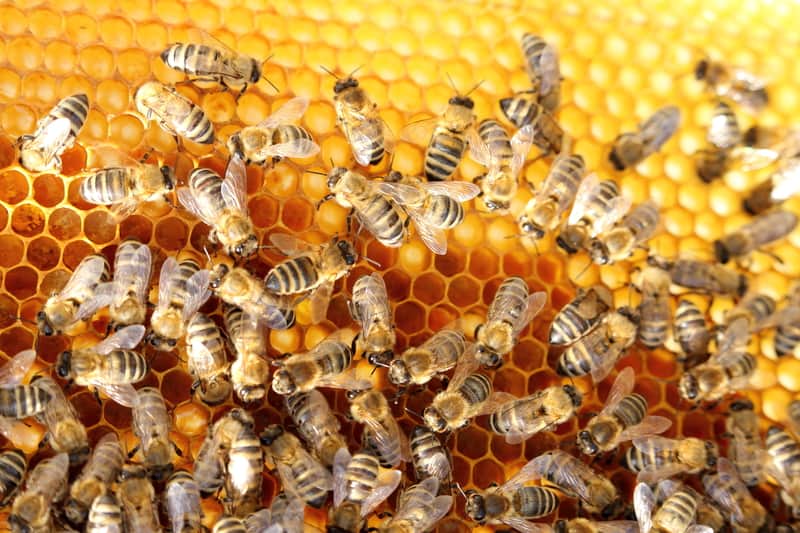
Honey bees craft their nests from wax, unlike the papery, gray structures of wasps or hornets. Inside a honey bee nest, you'll find perfectly hexagonal cells, all packed together. Outside, they have a bumpy yet generally smooth, waxy feel. The nests’ size can vary, from something as small as a football to a large one several feet long and wide, filling an entire tree hollow or wall cavity. If you’re looking to find a honey bee hive, look for fuzzy, yellowish-brown bees with black stripes calmly flying in and out of a small opening, looking busy rather than aggressive.
Where do honey bees nest?
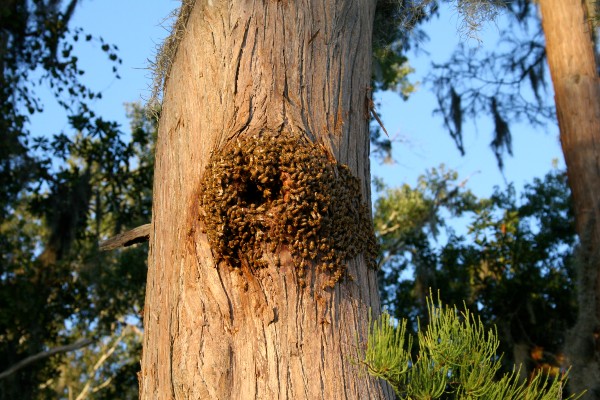
Honey bee nests are usually in hollow, protected spots like hollow trees or rock crevices, and sometimes even in parts of your house like walls, attics, chimneys, or even sheds. While pictures may typically show nests dangling from branches, honey bees actually rarely leave their homes exposed. It's rare to have more than one honey bee nest in a house since suitable, large, hollow spaces are limited, but it's not impossible if there are distinct, separate areas.
How do honey bees make their hives?
Depending on varying factors like weather conditions, a well-established honey bee nest can survive anywhere from two to five years. Honey bees construct their nests from wax, which they secrete from glands located in their abdomens. Most of the hive consists of comb, a series of interlocking hexagonal cells made from this wax. To produce wax, a worker bee consumes honey and converts the sugar within her body, and she chews it, mixing it with saliva to make it pliable.
Each cell is formed from many tiny pieces of this wax, which are repeated tens of thousands of times as the hive expands. A typical honey bee nest is composed of approximately 100,000 individual cells. Generally, the cells at the top of the comb hold honey, the middle cells store pollen, and the lower cells serve as "brood cells," where young bees are hatched and raised.
Why are they called honey bees?
As their name suggests, honey is vital to honey bees. But these bees don't need this honey to support their hive-building industry. They also rely on honey to survive the cold winter months when they can’t venture outside the hive to gather nectar and pollen. That means they must store all the honey needed to survive the winter, often between 40 and 60 pounds.
Honey bees also spend much of the winter around their queen, keeping her warm and capable of reproducing. That also requires a large expenditure of energy. Once again, honey fuels honey bee activity.
Should you get rid of a honey bee hive if it’s near your home?
Bees don't have to be pests. Without their pollinating flights between flowering plants, we would not enjoy many of the foods we do, from apples to almonds. Bees are, by and large, beneficial insects, but if they build a nest in your house or on your property, they can become a nuisance, pose a threat to anyone allergic, and even cause damage to the structure over time. The honeycomb can weaken walls; bees may chew through wood while creating their nests.
If you have bees and want them removed, it's recommended to call a professional beekeeper who can safely relocate them. They have the necessary protective gear and know the best practices for honey bee nest removal. However, if the honey bees build a nest in your house and are causing damage, contact Terminix bee experts and we can help you find a solution.