Home Garden
What are those tiny white bugs in or around your home?
Nobody wants to find a bug in their home, and it can be even worse when you don’t know what kind of insect it is. If you see tiny white bugs in your house, they could be any number of pests. And the type of pest largely depends on where you find it. Learn about some common white bugs and find out which ones may pose a threat to your home.
Content Updated: August 8, 2025
Termites
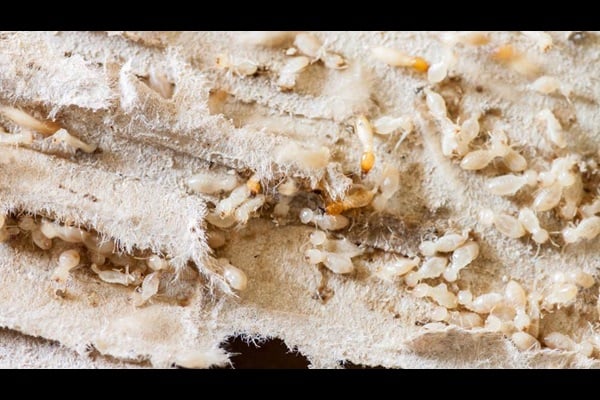
Certain castes of subterranean termites are white in color. Because they live underground, it’s highly uncommon to see these termites in your home, unless they are performing mating flights (also called “swarms”) or an infestation is severe. Still, it’s important to be on the lookout because these pests can damage the structure of your home.
Learn > Other signs of termite activity
Eliminating moisture and limiting wood to soil contact can help prevent tiny white bugs like termites from escalating. Because termites are hard to spot and damage can go unnoticed for long periods of time, it’s recommended to have a termite control professional inspect your home annually. Schedule your FREE termite inspection today.
Clothes moths
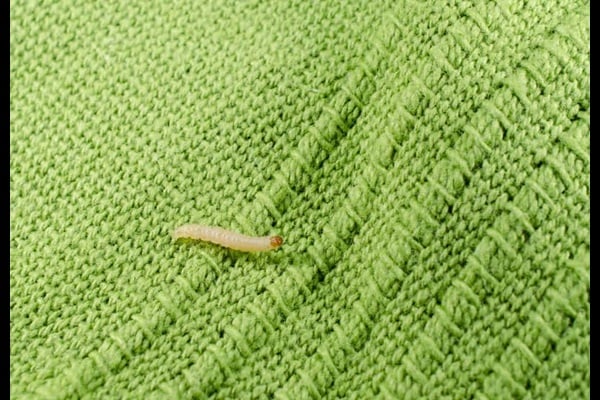
There are several species of moths, but there is one in particular that is known to be a pest in homes: the webbing clothes moth. Webbing clothes moths are about three-eighths of an inch long and cream colored. Their worm-like larvae are white. Clothes moth larvae feed on natural fibers, including animal hair like wool and cashmere. If these moths enter your closet, they can easily damage your clothes. To avoid damage, at-risk items should be stored in plastic coverings.
Related > Why do moths eat clothes?
Psocids
Psocids are small white bugs that prefer dark, moist places with mold, which they feed on. Outside, they’re commonly found under the bark of trees, which has earned them the nickname “bark lice.” Inside, they may also be referred to as “book lice,” although they’re not really lice at all — they just happen to be found near books stored in damp locations.
Fortunately for homeowners, they are mostly harmless and are rarely seen as pests. Some species can feed on glue in books and can destroy book bindings. And some other species are stored product pests because they feed on the glue of the packaging and reproduce in the stored product. To prevent damage to your home, focus on reducing moisture that may attract them.
Mites
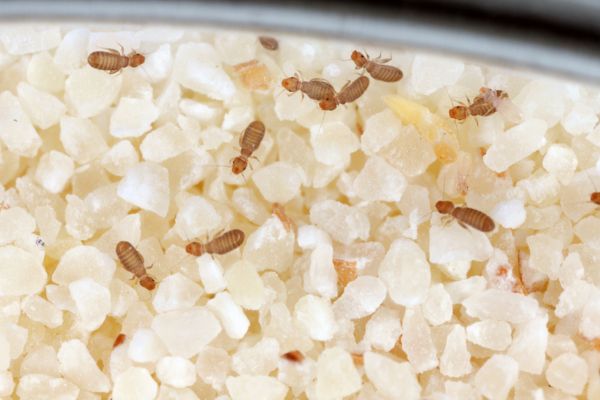
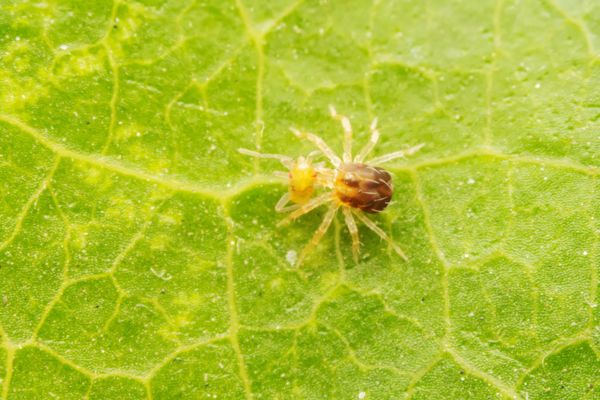
Most likely to be found in the kitchen, various types of mites, including grain mites, are extremely small, pearly-white or grayish-white arachnids. They prefer to live in conditions with high moisture and humidity. As their name implies, grain mites specifically feed on processed grains, but other types of mites, such as cheese mites and flour mites, also thrive in similar environments. These pests can feed on a range of foods, including wheat germ, yeast, cheese, flour, cereals, and other starchy or protein-rich items. They may be transported into your home through packaged foods. If the conditions in your pantry are warm and humid enough, these mites can reproduce rapidly, with females laying up to 800 eggs in their lifetime.
IIf you find any type of mites in your home, it’s important to dispose of any contaminated food. Clean your kitchen and shelves thoroughly, and ensure that all foods are sealed in airtight containers to avoid further contamination. Since many types of mites thrive in high humidity, drying out affected areas can help control their populations and prevent future infestations.
Mealybugs
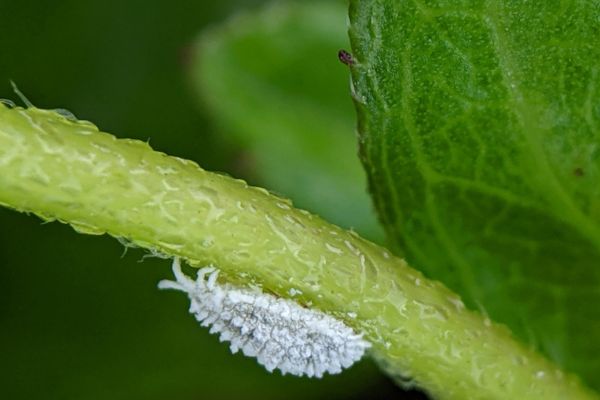
If you have several houseplants, you may be putting yourself at risk of these tiny white bugs. Mealybugs are most commonly found outdoors, where they infest perennial plants like fuchsia, gardenia, and hibiscus, as well as citrus trees and grapes. These insects are very small, oval-shaped, and white in color. They are known for excreting a sticky, wax-like substance. In nature, mealybugs have a number of natural predators that help control their colonies and reduce populations. Be sure to inspect any greenhouse plants before bringing them home or planting them in your garden.
Whiteflies
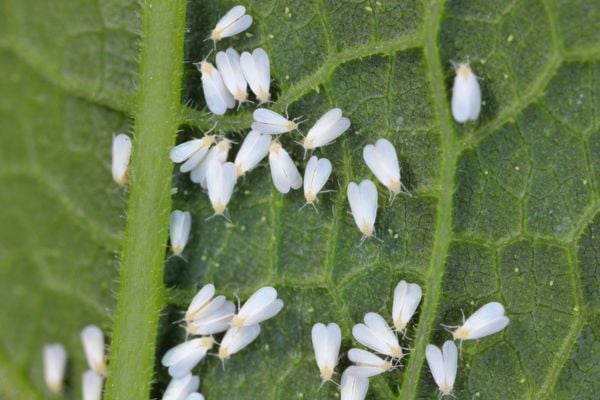
These tiny white flying bugs are related to aphids and mealybugs. These insects are tiny, with the exact size depending on the species. Like mealybugs, whiteflies are known for infesting and damaging plants. They also excrete sticky honeydew and are difficult to control. Whiteflies are commonly found outside, but they can be transported into the home on infested houseplants. As with mealybugs, before purchasing any plants to bring into your home, check under leaves for these insects to help avoid infestation.
Springtails
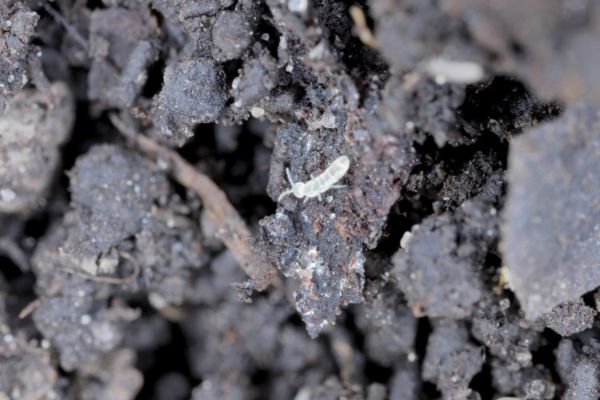
Springtails are small, wingless insects with an elongated, soft body, and can be white in color. Springtails thrive in moist environments, often found in soil, leaf litter, and decaying organic matter. They prefer shaded areas that maintain humidity, making them common in gardens and potted plants. While they are generally beneficial and important for soil health through their role in decomposition and nutrient cycling, they can occasionally become a nuisance, particularly when large populations invade homes or gardens.
Aphids
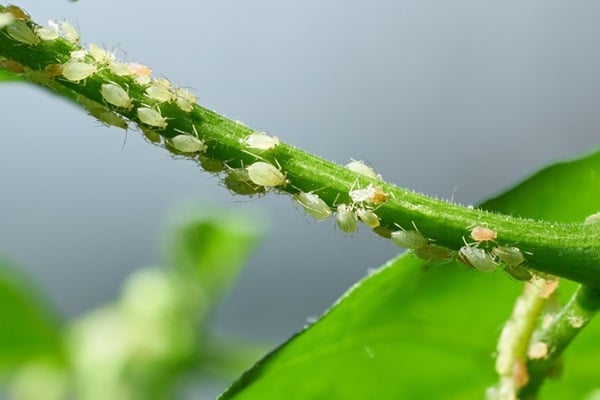
These small white bugs are commonly known as plant lice. They have a pear-shaped body and long antennae, along with two distinctive tube-like structures on their backs that excrete a sticky substance called honeydew. Aphids are primarily found on the new growth of plants, including leaves, stems, and flower buds, where they gather in large colonies. They are prevalent in gardens, farms, and greenhouses, often seeking out crops and ornamental plants. Aphids can cause significant damage to plants by feeding on their sap, which results in stunted growth, curled leaves, and, in severe cases, plant death.
Better safe than sorry
Whether you think you’re dealing with a harmless psocid or a fearsome termite, it’s better to be safe than sorry. If you see tiny bugs in the house, it’s best to contact a professional. The pest control professionals at Terminix are trained to identify common home invaders and can provide specialized treatment options to help you keep your home protected from small white bugs.