Bug Facts
What are fleas? Interesting facts about fleas and their behavior
Content Updated: October 13, 2025
Key takeaways
- Fleas are known to have existed for at least 60 million years, but certain fossil evidence suggests that they’ve been around for over 160 million years.
- Jumping is the main form of movement for fleas, and their leaps are powered by specialized proteins working as springs in their legs.
- On top of being irritating, flea bites are known vectors for a variety of diseases.
- Maintaining your property, consulting with vets, and getting in contact with professional pest control services are all ways to help protect yourself from fleas.
Jump to section:
- Flea origins: Where do fleas come from?
- Flea skills: How high can fleas jump?
- Flea behavior: What do fleas do?
- Flea bites: How dangerous are fleas?
- Flea prevention: How do I protect my family, pets, and home from fleas?
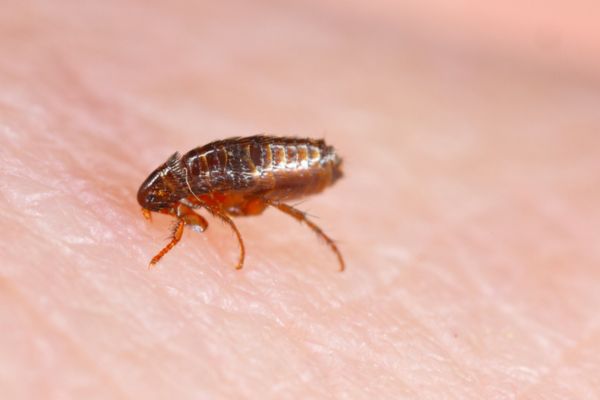
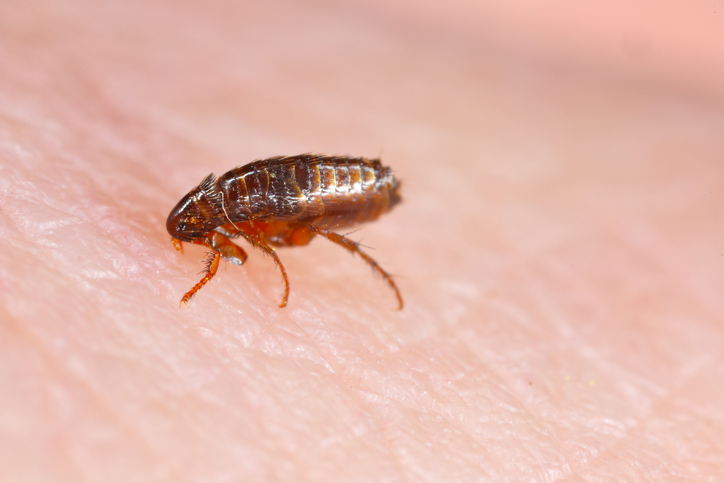
Fleas are parasitic pests that feed on the blood of warm-blooded mammals, and there are 325 species of flea that can be found in the United States alone.
The most common kind of flea in the US is the cat flea; despite its name, this insect isn't limited to feeding on felines. It can also feed on dogs, wildlife, and even bite humans if they have no other options.
Because they often afflict domestic animals, fleas are the archenemy of cats and dogs everywhere. They say to know your enemy, so here’s what you should know about the flea.

Flea origins: Where do fleas come from?
Fleas are a cosmopolitan species, meaning that they can be found nearly all around the world. They’ve been around for at least 60 million years, but there’s fossil evidence that suggests they date back even further—up to 165 million years. And they’ve always been around in the United States, too.
If you’re wondering where fleas come from when they end up inside your home, the answer is most likely your pets. However, there’s still a variety of other ways they can find their way indoors, including:
- Hitching a ride through clothing or second-hand goods.
- Entering through open windows and doors.
- Living in your yard or on nearby animals.
Their astonishing ability to leap also makes jumping onto new hosts or through openings a breeze. They can travel as far as their hosts can take them, but you’ll typically find them living in warm, moist environments.
Where can you find fleas?
Fleas prefer to live on their ideal hosts, if they can. Otherwise, you can expect to find them in grassy and shaded areas if you’re outdoors. When it comes to finding them indoors, they’ll typically be living in, on, or around:
- Carpets
- Bedding—including human bedding, but they’re more likely to be found among pet bedding
- Cracks in wooden floors
- Upholstery
Though fleas can take up residence in human hair, this is very rare. Hair is inferior to fur when it comes to providing shelter, insulation, and food, so fleas don’t often have reason to choose living on a human over a pet.
How did fleas evolve?
Fleas are generally believed to have evolved from ancient ectoparasitic ancestors. More specifically, fleas are thought to have evolved from the same ancestor as scorpionflies, though a competing hypothesis posits that scorpionflies and fleas evolved independently from an earlier common ancestor. Whatever the case, fleas most likely emerged after mammals did.
Flea skills: How high can fleas jump?
Fleas are one of many insects that are incapable of flight. Instead, their powerful legs provide them with their primary source of movement: jumping.
On average, fleas can jump eight inches horizontally and five inches vertically. That might not seem like much, but relative to a flea’s tiny size, it’s the equivalent of jumping approximately 160 times your body length. A human with the jumping abilities of a flea could do more than best even the greatest of Olympic athletes.
These impressive jumping feats are fueled by a specialized protein in their legs called resilin. This protein has elastic properties, making it act like a spring, allowing fleas to store and release energy for efficient jumps. Unfortunately for us, this just makes it easier for them to reach potential hosts.
Flea behavior: What do fleas do?
Fleas eat 10 to 15 blood meals per day. Adult fleas usually live and feed on a single cat or dog, but they may move from one host to another when animals play or sleep together.
Though many fleas are specialized for feeding on specific hosts, most fleas can feed on more than one type of host animal if they have no other option. For the most part, fleas target warm-blooded mammals—over 90% of all flea species attack mammals, with only 5% attacking birds.
Common host animals in the US include:
- Cats
- Dogs
- Raccoons
- Rats
- Humans
Flea bites: How dangerous are fleas?
Though a flea bite on its own isn’t necessarily dangerous, the allergic reactions many people have in response to them can be harmful, and the potential diseases that fleas can carry could be deadly. They’re even one of the primary perpetrators behind the spread of the bubonic plague during the Black Death.
Cat fleas, in particular, are also one of the hosts of dog tapeworms. If a host flea is ingested, then it’s possible to get tapeworms. Children and pets are at a higher risk of accidentally ingesting a flea with tapeworms due to their proximity to the ground.
Flea prevention: How do I protect my family, pets, and home from fleas?
When it comes to keeping fleas away, here are a few measures you can take:
- Maintain cleanliness in your home: Vacuum pet bedding, carpets, floors, and upholstered furniture regularly. Wash bedding thoroughly and throw away vacuum cleaner bags so fleas can’t climb out.
- Consult your vet: Oral insecticides can either kill adult fleas or prevent them from reproducing, eliminating future flea infestations. Topical insecticide treatments can also be applied to kill adult fleas.
- Call Terminix: If you’re dealing with a serious flea problem, a Terminix professional can expertly assess the situation and apply the correct treatments to help control flea populations inside your home.