Content Updated: April 22, 2026
Key takeaways:
Fleas are tiny, wingless parasites that feed on the blood of pets and humans and can quickly infest a home if not addressed.
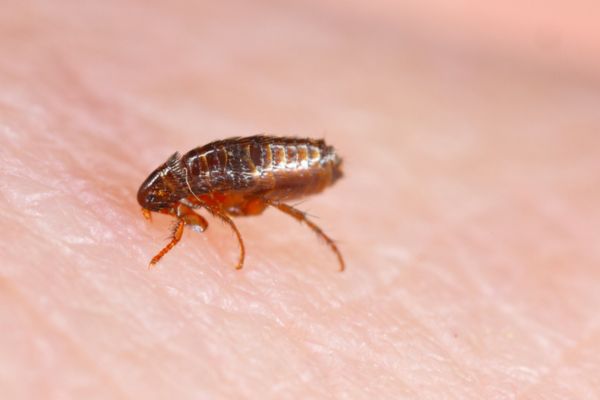
Adult fleas are about 1/16 to 1/8 of an inch long, reddish-brown to dark brown, and equipped with strong hind legs for jumping.
Signs of fleas in a house include live fleas, flea dirt, eggs scattered in pet bedding, carpets, furniture, and changes in pet behavior, such as excessive scratching or hair loss.
Flea bites on humans appear as red, itchy bumps with a halo. They're typically often more irritating than mosquito bites, but reactions can vary depending on individual sensitivity and allergies.
Fleas are more than just a nuisance. These tiny, wingless parasites feed on blood and can cause intense itching, skin irritation, allergic reactions, tapeworms, and, in some cases, disease. Because they reproduce quickly, recognizing the signs of fleas in your house is key to preventing a small problem from becoming a widespread infestation.
Understanding how to tell if you have fleas can help you act quickly and protect your family, your pets, and your home. If you're already seeing these pests inside your home, our flea control services can help eliminate and prevent future infestations.
What does a flea look like?
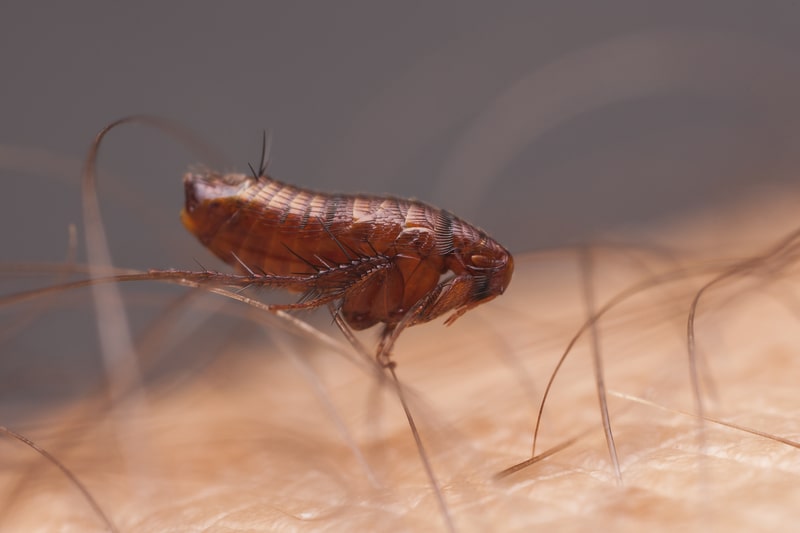
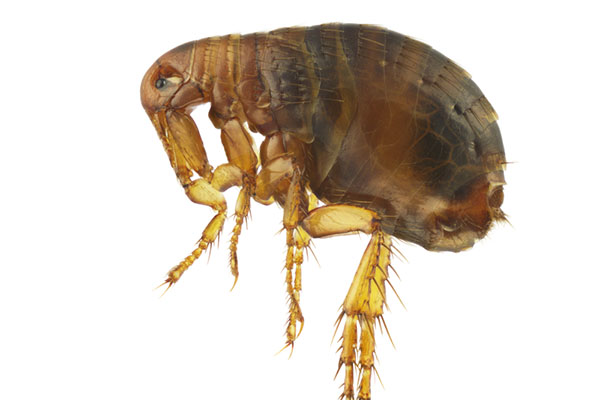
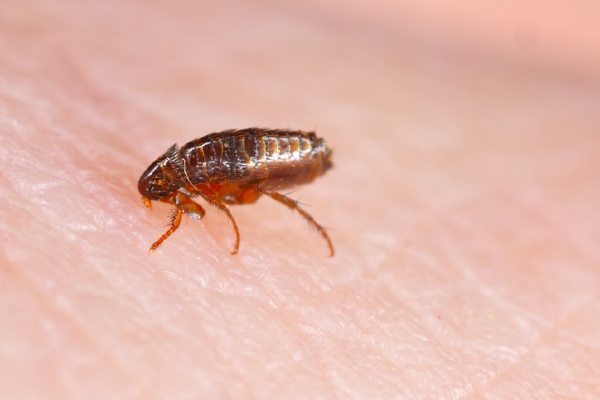
Fleas are wingless insects with reddish-brown to dark brown bodies. Adult fleas are about 1/16 to 1/8 of an inch long (roughly the size of a sesame seed). Their bodies are narrow and flattened from side to side, which allows them to move easily through pet fur, carpets, and upholstery.
Fleas cannot fly, but they can jump several inches vertically and even farther horizontally, which is how they move quickly between pets, people, and surfaces. Under a microscope, you can see that fleas have a hard exoskeleton covered in tiny bristles and spines that help them cling to fur. They also have tube-like mouthparts that pierce the skin and feed on blood.

How to check you and your pet for fleas
If you're trying to understand how to tell if you have fleas, regular checks after certain activities are one of the smartest habits you can build. Fleas can spread easily in places where animals gather, so make it a routine to check for fleas after:
Visits to dog parks
Contact with stray animals or wildlife
Hiking or time spent in tall grass
Moving into a new home
If your pet has been scratching more than usual
After traveling
To check your pet for fleas, focus on areas where they prefer to hide. Check these spots closely and carefully:
A flea comb is one of the most effective tools for checking animals. These fine-toothed combs trap live fleas and their fecal matter (flea dirt). Comb slowly from head to tail, wiping the comb onto a white paper towel after each pass.
Fleas don't live in human hair like lice, but they can bite exposed skin. Look for:
Small, red, itchy bites
Bites around ankles, lower legs, or waistline
Persistent itching without a clear cause
If you're noticing bites along with a scratching pet, that combination is often one of the early signs of fleas.
Signs of a flea infestation in your home
Detecting a flea infestation early can help prevent a larger problem later. If you notice any of the following signs of fleas in your house, you should contact Terminix for professional flea treatment.