

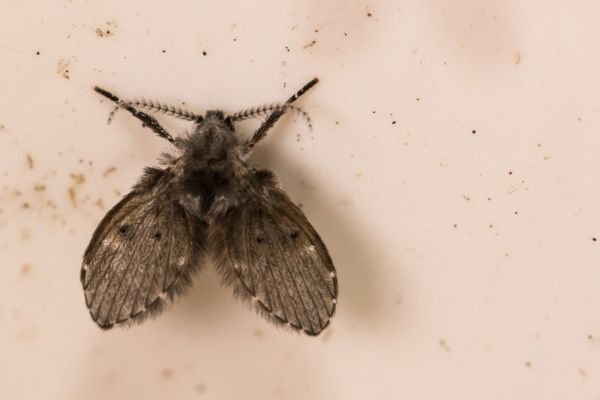
What are drain flies?
These small insects are known for breeding in drains. Learn more about how to deal with them.
Content Updated: September 29, 2025
Key takeaways
- Drain flies are characterized by their small, fuzzy, moth-like appearance and tendency to breed in drains with organic matter buildup.
- Drain flies, fruit flies, and gnats are similar in size but differ in overall appearance and behavior.
- Though drain flies aren’t directly harmful to humans or other animals, they are still indicators of unsanitary conditions and can carry bacteria or pathogens on their bodies.
- Flushing them out and removing their breeding grounds is the best way to get rid of drain flies invading your home.
Jump to section:
How do I stop the spread of bed bugs?
What should I do if I find bed bugs in my home?
What should I do if I find bed bugs in my home?
Drain flies—also known as moth flies, sewer flies, sewer gnats, or sink flies—are household flies often found in pipes and drains. They thrive in humid environments and are especially drawn to standing water and the build-up of moist organic material in drains and pipes.
They’re relatively common in North American households, so be prepared and know what to expect in case you ever come face to face with one.
Identifying drain flies
Here are some key characteristics to keep an eye out for when it comes to drain flies:
- Size: Drain flies are small, ranging from 0.06 to 0.2 inches in length.
- Color: They typically have a light gray or tan body, though some species can appear brown or black.
- Body: They have distinctly hairy bodies, giving them a moth-like appearance.
- Wings: When at rest, their wings are generally held over their bodies in a roof-like manner.
- Eyes: They have large and prominent compound eyes.
Due to their size, it can be hard to distinguish many features on a single drain fly with the naked eye. However, their behavior can also help you identify them, as they are weak fliers and often appear to hop or jump around.
You’ll typically find drain flies in kitchen or bathroom drains, as the decaying organic matter that they love is more likely to build up in greater amounts in these areas. However, this doesn’t preclude them from being found elsewhere.
If you’re identifying drain flies, it’s also important to be able to identify their larvae. Drain fly larvae are small, measuring between 0.2 and 0.4 inches in length, and they’re equipped with 11 body segments that give them a worm-like appearance. They’re also generally dark brown at both ends with a pale center.
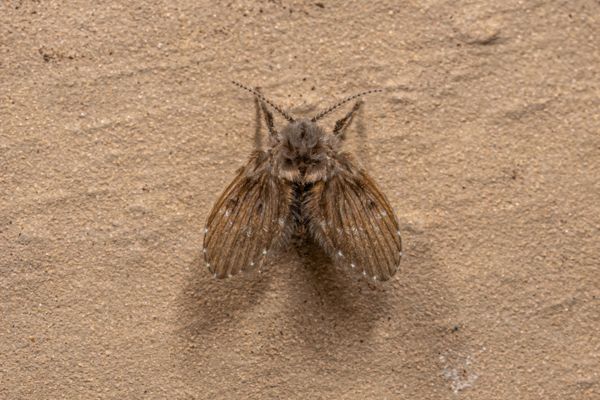
Drain flies vs. fruit flies vs. gnats
Some insects that drain flies are easily mistaken for include fruit flies and gnats. Though all three of these insects are very small and capable of flight, there are still a number of differences that can help you determine which is which.
Fruit flies
These insects typically have red or black eyes and have a body type similar to that of a house fly. They’re most likely to be found near fruits, inside garbage or recycling bins, or in your drain.
Gnats
There are many varieties of gnats, but fungus gnats are the most noteworthy. They have a mosquito-like appearance and are most likely to be spotted near potted plants and moist soil, with little interest in going anywhere else.
Drain flies
Their moth-like and fuzzy appearance is what distinguishes these pests from others. On top of being clumsy fliers, they’ll also have a dark border around their wings. You’ll mostly find them near drains.
Are drain flies harmful?
Generally speaking, drain flies aren’t actively harmful to people or pets. They don’t bite, sting, or transmit diseases. However, though they don’t pose any inherent danger, drain flies are an indicator of unsanitary conditions, and they can carry bacteria and pathogens from dirty surfaces and areas.
They can also contribute to food contamination or respiratory irritation. So, even if they’re not directly harmful, they should still be dealt with as soon as possible.
How long will a drain fly infestation last?
On average, a drain fly infestation can last around 20 days, lining up with the total lifecycle of these insects. However, their rapid reproduction means it’s possible for the infestation cycle to start all over again with ease.
If you’re taking proactive measures to eliminate them, you can likely fix the problem within a week.
How to get rid of drain flies
If you’re dealing with a drain fly problem, some DIY methods you can use to get rid of them include:
- Flushing out breeding sites: Boiling water, baking soda, or enzyme cleaners can break down organic matter build-up inside pipes.
- Cleaning your drains: Use a drain cleaner to break down the sludge inside your drains that drain flies feed on and use to breed.
- Removing standing water: Fix leaky pipes and empty out areas where moisture collects to eliminate breeding grounds for drain flies.
To stop them from ever becoming a problem, you can also take preventative measures, such as regular drain maintenance, sealing off entry points like gaps in doors and windows, and maintaining general cleanliness.
If you have a serious pest problem, however, let Terminix help with targeted treatment plans and free inspections.