

Tips for safe and proper dead rat removal
Content updated: September 15, 2025
Key Takeaways:
- Dead rats can pose health risks: A carcass can spread disease, attract insects, and create lingering odors.
- Signs of a dead rat are hard to miss: Strong odors, insect activity, stains, and droppings often reveal where a rat has died, even in hidden spots like walls.
- Safe disposal matters: Always wear protective gear, double-bag the carcass, disinfect the area, and never sweep or vacuum droppings.
- Prevention is key: Seal entry points, secure food, reduce clutter, and consider professional exclusion services to help prevent future infestations.
Jump to section:
Finding a dead rat in your home is not only unsettling, but it can also pose health risks. Rodents often hide in hard-to-reach places like attics, basements, wall voids, and inside furniture. Removing a dead rat on your own can expose you to dangerous diseases. It’s best to rely on a rat exterminator who knows how to dispose of dead rats safely and effectively and help protect your home from future infestations.
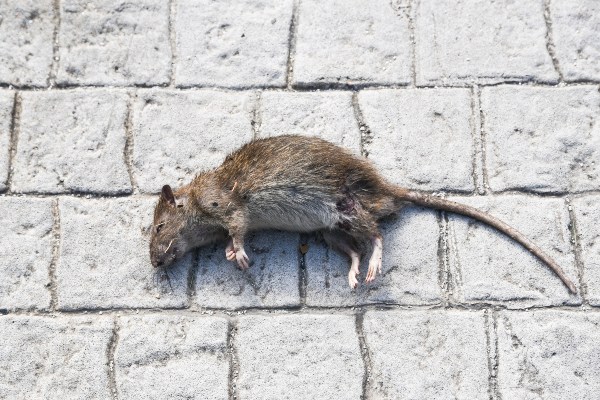
Finding the dead rat
Whether a rat dies in an open area or in more inaccessible places like behind walls, there are signs you will notice. The most common ones are:
- Strong odor – The clearest indicator is a dead rat smell, a foul, persistent odor that can worsen over time.
- Insect activity – Flies, beetles, and maggots may appear near the source.
- Stains – Greasy or dark stains may appear on walls, ceilings, or floors as fluids seep.
- Droppings – Rat droppings nearby can suggest an active infestation as well.
Depending on temperature and humidity, a rat can take anywhere from a week to several weeks to fully decompose, and the odor can last just as long if not addressed.
Will a dead rat attract more rats?
Other rats will typically avoid the carcass, but they are still attracted to the same food and shelter that drew the first rat. In some cases, rats may chew on a carcass if food is scarce, but this isn’t common.
How to dispose of a dead rat
Handling a dead rat on your own can expose you to harmful pathogens , parasites, and pungent odors. If you choose to handle the situation yourself, there are a few tips to keep in mind:
- Wear protective gear. Always use disposable gloves, a mask, and, if possible, eye protection to limit exposure. Do not touch the carcass with your bare hands.
- Securely bag the carcass. Place the dead rat in a sealed plastic bag, then put that bag into a second one. Tie the outer bag tightly to prevent leaks.
- Dispose of it properly. Check your local regulations for animal disposal.
- Clean and disinfect the area. After removal, properly clean the area. Do not vacuum or sweep droppings or nesting materials, as this can release harmful particles into the air.
- Eliminate odor. Ventilating the area and using odor-neutralizing products like commercial enzyme-based cleaners can help break down lingering smells.
What to do if the rat is in the walls?
If a rat dies inside the walls, it can be tricky (and unpleasant) for homeowners. Because the smell can linger for weeks and removal can require specialized tools, it’s best to call in a professional. Our rodent control experts know how to dispose of dead rats and have the experience to safely locate and remove the carcass from your home, helping to eliminate odors and give you peace of mind.
What you need to do after you remove a dead rat
After you remove the dead rat, you need to protect your home against future intrusions.
- Seal cracks, gaps, and holes around your foundation, roofline, and utility entry points.
- Keep food tightly sealed in containers.
- Reduce clutter indoors and outdoors where rodents may nest.
- Regularly remove trash and trim overgrown vegetation.
Even with these precautions, rodent problems can be challenging to eliminate without professional help. That’s where Terminix comes in.
Our trained rodent exterminators don’t know how to get rid of dead rats—they identify and address the root causes of infestations. With comprehensive rat control and rodent exclusion services, we provide long-term solutions to keep pests from returning. Schedule a free inspection today to get started.