Roof rats (Rattus rattus)
Content Updated: August 14, 2025
Roof rats, also known as black rats or ship rats, are a common urban pest known for their climbing abilities. As their name suggests, these rats often inhabit upper areas of buildings, such as roofs, ceilings, and attics. Roof rats are also notorious for their potential to cause significant property damage and contaminate food sources. Learn how to identify roof rats, understand their habits, and take effective steps to prevent and control infestations.
Jump to section:
- Identifying roof rats
- Where do roof rats live?
- Roof rat diet and feeding habits
- Roof rat reproduction and life cycle
- Roof rats and human interactions
- How to prevent roof rats
- Professional rat control solutions
Identifying roof rats
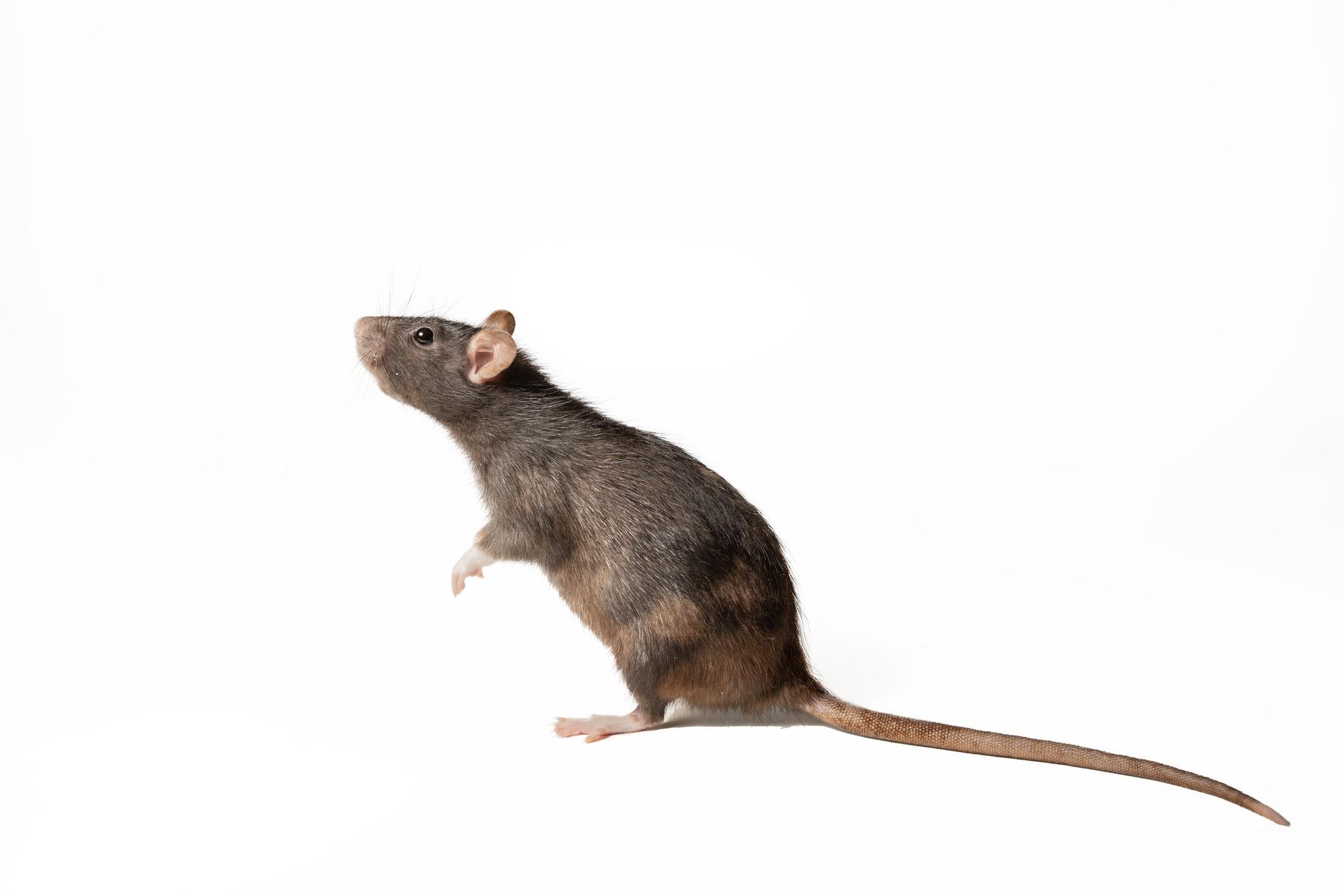
Roof rats are medium-sized rodents measuring six to eight inches in body length. Their tails are longer than their bodies, ranging from seven to ten inches. Their fur is smooth and fine, and their coloration varies from black to gray or dark brown, with lighter undersides. They also have large, nearly hairless ears and a slender build, distinguishing them from other rat species.
Behaviors and habits
Roof rats are exceptional climbers, often nesting in elevated spaces such as attics, ceilings, and roofs. Unlike their ground-dwelling relatives, roof rats prefer to remain above ground, making them more challenging to detect and control. They are nocturnal creatures, meaning they are most active at night, foraging for food and building materials. During the day, they seek shelter in secluded areas like soffits, gable vents, or roof spaces.
Roof rats frequently enter homes in search of food when outdoor resources like seeds and plants dwindle, typically in the fall. They can squeeze through small openings, gaining access via soffit vents, gaps around cables, damaged gable vent screens, or roof vents. Their climbing skills and ability to fit through narrow spaces make them particularly adept at infiltrating homes, often without being noticed until the infestation is well established.
Signs of a roof rat infestation
Identifying a roof rat infestation early can help prevent extensive damage. Here are some key signs of rats to watch for and the areas in your home to inspect:
- Droppings: Roof rat droppings are small, spindle-shaped, and dark in color. Check attics, crawl spaces, and areas where food is stored.
- Gnaw marks: Look for gnawed wires, wood, or insulation, particularly in attics, walls, or near cables.
- Grease marks: Roof rats leave greasy smudges along walls and rafters from the oils in their fur.
- Scratching sounds: Noises in the walls, ceilings, or attic, especially at night, may indicate roof rat activity.
- Nests: Roof rats build nests using shredded materials like paper, fabric, or insulation, often in hidden spaces such as attics or soffits.
- Unusual smells: A strong, musky odor can indicate an established infestation.
Damage caused by roof rats
Roof rats can cause significant damage to homes by gnawing on electrical wires, which increases the risk of fires, and chewing through wood, drywall, and insulation, weakening structural components. They can also contaminate food supplies with droppings and urine and spread harmful pathogens, posing health risks to both humans and pets.
>Where do roof rats live?Roof rats are commonly found in coastal and southern regions of the United States, thriving in warmer climates. Outside, they live in fields, wooded areas, farms, and vacant lots, often near human structures where food and shelter are readily available. They favor environments with dense vegetation or debris, such as stacked firewood, stones, or piles of leaves.
Inside homes, roof rats prefer elevated spaces like attics, ceilings, and wall voids, using their exceptional climbing skills to access hard-to-reach areas. They can enter through gaps as small as a quarter, using soffit vents, roof vents, cracks in walls, or openings around cables and pipes. Their agility allows them to scale trees, walls, and utility lines, making it easy to find entry points into homes.
Roof rat diet and feeding habits
Roof rats are omnivorous, feeding on a variety of foods, including fruits, vegetables, seeds, nuts, and grains. They also consume insects and scavenge on human food or pet food when available. Their diet often depends on what is most accessible in their environment, making them highly adaptable feeders.
Roof rats are most active during the warmer months when food is abundant, but they can remain active year-round in milder climates. Cooler weather often drives them indoors, where they forage for food and shelter. They are nocturnal creatures, feeding primarily at night, and may return to their feeding sites multiple times in a single evening.
Roof rat reproduction and life cycle
Roof rats typically live for about one year in the wild, although some may survive longer under ideal conditions. Their life cycle consists of three main phases:
- Newborn phase: Roof rats are born hairless and blind after a gestation period of about 21-23 days. Litters usually consist of five to eight pups.
- Juvenile phase: By the second or third week, pups develop fur and open their eyes. They are weaned at about three to four weeks old and become independent shortly after.
- Adult phase: Roof rats reach sexual maturity at around two to three months of age. Once mature, they can reproduce year-round in warmer climates, with females capable of having up to six litters per year.
Their rapid reproductive rate, combined with their ability to adapt to various environments, allows infestations to grow quickly if left unaddressed.
Roof rats and human interactions
Roof rats can transmit several diseases, including leptospirosis, salmonellosis, and rat-bite fever, primarily through their droppings, urine, or bites. Leptospirosis can cause flu-like symptoms, muscle pain, and, in severe cases, kidney or liver damage. Salmonellosis, contracted by consuming contaminated food or water, leads to diarrhea, fever, and abdominal cramps. Rat-bite fever can result in fever, rash, and joint pain if untreated.
While roof rats are not typically aggressive, they may bite if they feel cornered or threatened. Their primary threat, however, lies in the damage they cause to homes. Roof rats are notorious for gnawing on electrical wires, increasing the risk of fires, and chewing through insulation, wood, and other structural components. They can also contaminate food supplies and storage areas with droppings and urine, creating unsanitary conditions that can pose health risks to humans and pets.
How to prevent roof rats
Their ability to climb and reproduce rapidly can make roof rats difficult to control with DIY methods. Even a small infestation can quickly grow if not addressed. To prevent roof rats from invading your home, follow these tips:
- Eliminate harborage areas: Keep firewood stored off the ground and as far from the home as possible. During colder months, only store small amounts of wood near the house as needed. Remove piles of debris, stones, bricks, and leaves that can provide nesting spots.
- Seal entry points: Inspect your home for gaps or cracks larger than one-quarter of an inch. Fill larger openings with steel wool or wire mesh before sealing with caulk or foam to prevent rats from chewing through.
- Install weather stripping: To block entry, use thick weather stripping on the bottom of all doors, especially garage doors. Ensure the door from the garage to the house is tightly sealed.
- Remove food sources: Store food in sealed containers and clean up crumbs, spills, or pet food immediately. Secure garbage in tightly lidded bins.
- Trim vegetation: Keep tree branches and shrubs trimmed away from the house to limit access to the roof and upper levels.
Professional rat control solutions
Terminix offers comprehensive rat control services, including detailed inspections to identify entry points and nesting areas, targeted treatments to eliminate infestations, and wildlife exclusion to seal your home and prevent future issues. Our experts tailor solutions to fit your needs, providing long-term protection and peace of mind. Schedule a free inspection today.