

Where do skunks live?
Content Updated: September 4, 2025
As long as food, water and shelter are available, skunks can be extremely adaptable and thrive in many regions, including rural or urban areas. Knowing what a skunk den looks like can help you identify a potential problem before it gets out of hand.
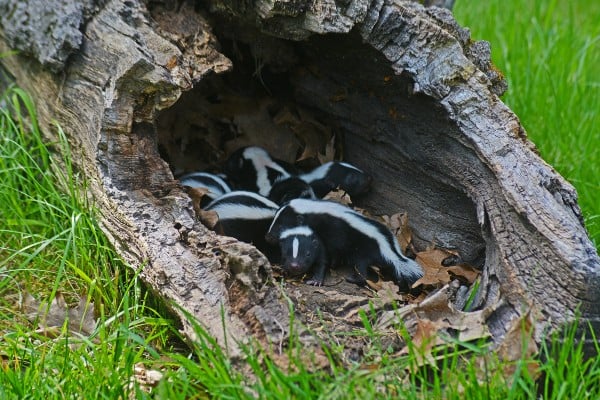
Skunks generally live in dens that they dig with their strong front claws. These skunk dens could be holes that you find in your yard. They may also find and live in an abandoned den built by other animals, such as foxes or woodchucks, or in hollow logs, woodpiles, or brush piles.
What does a skunk den look like?
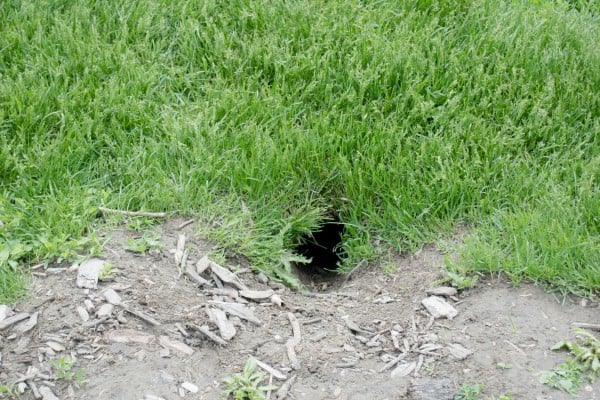
A skunk's den is typically a burrow with a smooth, mound-like dirt entrance where the skunk enters and exits. It often appears as a hole about four to five inches in diameter, similar to the size of a grapefruit. While skunks are generally solitary, they will sometimes den together in the colder months to share body heat. A large den can extend six to 20 feet long and house multiple skunks.
Where do skunks build their dens?
Skunks are likely to make their nests close to readily available food sources. This can be tricky because skunks are omnivorous, meaning they eat various things, including insects, grubs, fruit, eggs, human garbage, and sometimes even small vertebrates like mice. Due to the abundance of food and water, skunks often live near humans. Common skunk habitats include areas under porches, inside sheds, or in dark spaces around homes.
While skunks don't always return to the same den site every year, they may reuse a den if it's a good spot. Generally, skunks are transient and will only stay in a den for a few days, but they will remain in one longer during the colder months or to raise their young. A mother and her kits will stay in a skunk den for about two months after the young are born.
How can you tell if a skunk is on your property?
Skunks are most active from late winter to early spring (around February to March), as they mate and start raising their young. Keep in mind that skunks are nocturnal, so you’ll see them mostly at night. However, if you're looking during the day, signs of a nearby skunk include:
- Skunk tracks: These show five toes on each foot with visible claws.
- Distinctive scent: Their odorous spray is an obvious sign that a skunk is nearby.
- Small holes in your yard: Skunks will dig small, cone-shaped holes, one to three inches long, while searching for grubs.
- Raided garbage cans: Skunks will often pilfer through trash cans for food.
What to do if you see a skunk or a skunk den
Though skunks are typically calm, they will defend themselves if they feel threatened. Since their eyesight is poor, it's best to back away slowly and quietly if you see one to avoid startling it. Before spraying, a skunk will give you a few warnings: it may stamp its front feet, shake its tail, or fluff its fur. It's essential to be cautious around these animals, not only to avoid being sprayed but also because they can carry diseases. If you discover a skunk den on your property, do not try to handle it yourself, as it can be dangerous. Instead, it is best to contact a wildlife professional.
Can I get rid of a skunk den?
The smartest way to deal with a skunk problem is to prevent it in the first place. You can help prevent skunks by following a few simple tips:
- Secure your garbage: Use trash cans with tight-fitting lids to prevent skunks from scavenging for food.
- Remove food sources: Clean fallen fruit from trees, and avoid leaving pet food and water bowls outside overnight.
- Seal potential den sites: Use wire mesh to block off openings under porches, decks, and sheds to prevent skunks from burrowing.
- Manage your lawn: Skunks love to dig for grubs, and treating your lawn for grubs can make it less appealing as a food source.
- Remove clutter: Clear away woodpiles, brush piles, and other debris that could serve as a potential skunk den site.
Trying to evict a skunk on your own is a bad idea, unless you're a big fan of unpleasant smells. Skunks are generally calm, but they'll defend themselves with their famously potent spray if they feel cornered. Plus, there are often local rules about handling wildlife, so it's a job best left to the professionals. Get started with wildlife control services from Terminix today!