Education
What do bees look like?
There's a black and yellow insect buzzing around your yard. Easy call, right? It has to be a bee. Not so fast. Not every bee you see is the same. Some bees aren't even black and yellow. In fact, not every flying black and yellow insect is even a bee. Some are wasps and hornets. So, what does a bee look like, and how can you tell it apart from similar insects? Here are some quick and easy tips for bee identification.
What are bees?
Bees are flying, vegetarian insects that collect pollen and nectar as food sources. The hairs on their bodies make it easier to collect pollen, which is why almost all bees have hairy bodies. Bees are closely related to wasps and ants, even coming from the same order of insects, Hymenoptera – which can make bee identification even harder. Some species of bees, like European Honeybees, are best known for their role in pollination and for producing honey and beeswax.
Bees are found on every continent except Antarctica and in every habitat on the planet that contains insect-pollinated flowering plants. Both bees and wasps also sting, but only female bees have stingers. Most bees are less aggressive. Now that we know what they are, what does a bee look like?

Common bee features
While all bees buzz, what a bee looks like isn't always the same. In fact, some bees may not even look like “bees.” Bees are a diverse group of insects, but they share several common features that make them distinct from other types of insects. The most notable bee identification features include their hairy bodies, four wings, and specialized body parts for collecting and carrying pollen. Additionally, most bees have a narrow waist and a stinger, which they use for defense. Bees are also social insects, living in colonies or hives with a queen bee and many worker bees. Overall, what bees look like and their physical and behavioral characteristics make a bee a bee.
What does a honey bee look like?
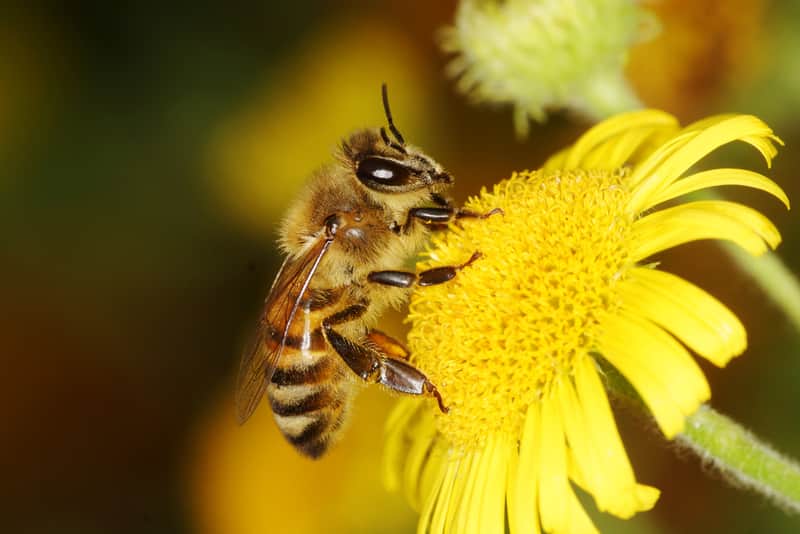
Knowing what a honey bee looks like can be confusing. Honey bees differ in color depending on the region in which they are found. You will most commonly see a honey bee with black stripes alternating with bands of amber to brown hairs. Still, some honey bees can look like they are all black. Honey bees measure around one-half to three-fourths of an inch. Most times, when you see beekeepers with large wooden boxes, these are hives containing honey bees. Honey bees were brought over by early European settlers and are not native to the United States.
What does a "killer bee" look like?

Africanized honey bees (AHB), especially the hybrids found in the U.S., are almost impossible to tell apart from the European honey bee – which is another reason bee identification can be difficult. Despite what these bees look like, their behavior is the true distinguishing factor between these two species. Africanized honey bees are extremely territorial and aggressive. They can attack in large numbers if they feel their hive is threatened. This aggressive behavior can last for days, posing a risk to unsuspecting people and animals.
Like European honey bees, Africanized honey bees can become aggravated by loud noises and vibrations and can be provoked by certain smells. Africanized honey bees are mainly found in California, Arizona, Texas, Nevada, and Florida.
What does a bumble bee look like?
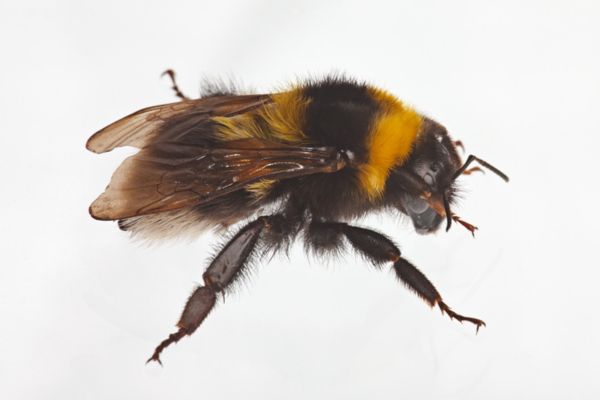
One of the most common bees you will see are bumble bees – so what do these bees look like? Bumble bees are large, fuzzy bees with round bodies covered in bushy hair. Typically, they will be black and yellow with alternating "warning" bands. Some species of bumble bees are brighter or darker in color, and bee identification can depend on where they live. While they are twice as large as a honey bee, bumble bee nests are fairly small and typically found in the ground. Honey bee hives can have between 10,000 and 50,000 bees, while a bumble bee colony can have as little as 50 bees inside. Unlike honey bees, who die when they sting, a bumble bee can sting multiple times. Fortunately, these bees are not typically aggressive.
What does a carpenter bee look like?
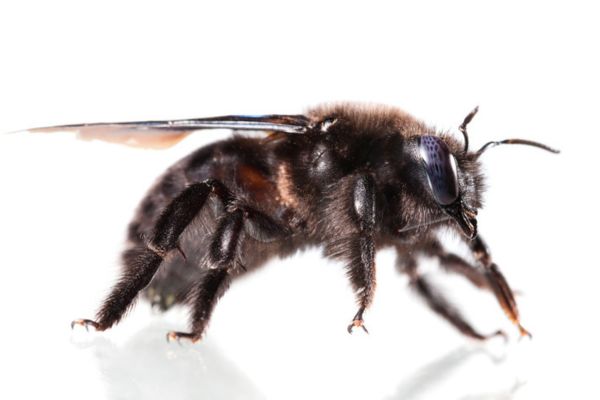
Carpenter bees are about the same size as bumble bees but fly much faster. This bee looks like a less colorful and hairy version of a bumble bee. They have a distinct, shiny black body and a black dot on the top of the mid-section of their body called the thorax.
One of the key features for bee identification of this species is their nesting habits. Carpenter bees aren’t social bees, meaning they nest alone. They burrow nearly perfectly round holes in wood to form their nest. If you see holes in porches, decks, patio covers, eaves, and other wood sources around your property, these might be carpenter bee holes. The entry holes are typically ½ inches in diameter, just big enough for you to put your finger in, not that you should. You might also find soft sawdust at the base of the hole. This comes from the bee digging the hole out. They don't eat the wood but rather chew through it.
Not only can their nesting habits be used for bee identification, but their behavior can help us know what a bee looks like. Males of this species are very aggressive. When infesting structures, they may cause alarm by "dive-bombing" humans and animals that come close to the nest the male is protecting. Fortunately, only the females have stingers and are seldom aggressive toward humans. However, they can cause thousands of dollars of damage to a home's siding, fascia, and soffits due to the structural damage they can cause from their nesting holes.
How to identify bees vs. hornets vs. wasps
When it comes to buzzing insects, it can be hard to tell the difference between a bee, a hornet, and a wasp. However, each species has its unique characteristics that set them apart. A bee looks smaller and more rounded than their counterparts, with fuzzy bodies and flat legs. Hornets, on the other hand, are larger and have a more robust, elongated body with a thin waist and a smooth texture. Additionally, bees are known for their pollination work, while hornets and wasps are known for their more aggressive nature. These distinct characteristics can help make bee identification easier, so you can know what buzzing insect has made it into your home or onto your property.