Content Updated: July 16th, 2025
Did you know there are over 20,000 species of bees around the world? Each type of bee has its own unique characteristics, behaviors, and habitats. Some bees are social and live in large colonies, while others are solitary and live alone. Some are well-known for their ability to produce honey, while others are important pollinators of certain plants.
Despite their differences, most types of bees are vital to the health of our planet and play an essential role in pollination and the ecosystem. Understanding the diversity of bees can help us appreciate and protect these fascinating creatures. Keep reading to learn more about all the different bee types.
The major bee families
There are six common bee families, each with their own distinguishing differences. Here is a brief overview of each kind of bee family:
- Apidae: This family includes some of the most well-known types of bees, such as honey bees, bumblebees, and carpenter bees. They are important pollinators and play a crucial role in many ecosystems.
- Andrenidae: These are small, solitary bees known for their ability to dig burrows in soil or sand. They are often referred to as "mining bees."
- Colletidae: This family includes bees known for collecting pollen and nectar using specialized hairs on their bodies. They are typically found in arid regions and deserts.
- Halictidae: These bees are also known as sweat bees because they are attracted to human sweat. They are typically small and metallic-colored and are essential pollinators of many plants.
- Megachilidae: These bees are sometimes called "leafcutter bees" because they use their strong jaws to cut pieces of leaves to use as nesting material. They are often solitary and are important pollinators of many crops.
- Melittidae: These are small, solitary bees that are found in arid regions. They are known for their elongated mouthparts, which they use to collect nectar from deep flowers.
Identifying the types of bees near you
In general, honey bees and bumble bees are some of the most common bee types homeowners encounter in the U.S. Carpenter bees are also frequently spotted, especially around wooden structures where they bore holes. It is less common to encounter sweat bees, which are small and attracted to human sweat, or mason bees, which are beneficial pollinators.
Identifying specific types of bees can be difficult, as many species behave similarly. Our professionals can assess the situation, determine which species of bees are present, and recommend a removal plan.
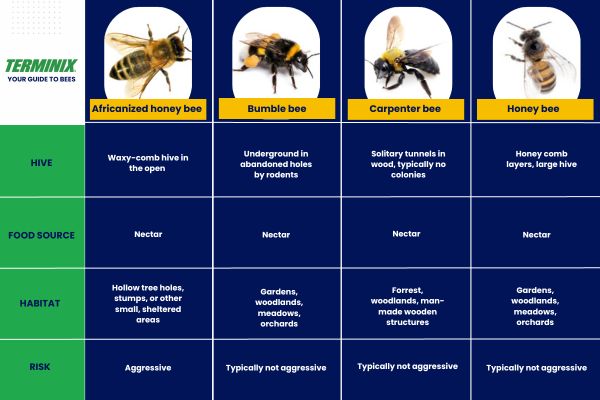
Africanized honey bees
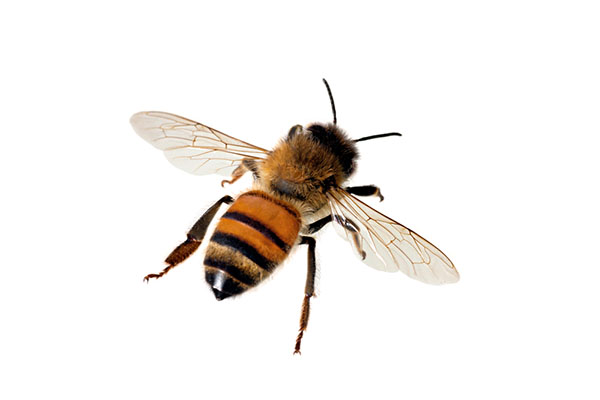
Africanized honey bees, often called "killer bees," belong to the Apidae family and are a hybrid of African and European honey bees. They look nearly identical to European honey bees, with golden-yellow bodies and dark brown bands.
- Size: About 3/4 of an inch
- Behavior: Defensive and aggressive, especially with their hives
- Habitat: Hollow trees, sheds, or other sheltered spaces
- Location: Southern United States, West to central California, South and Central America
- Sting: Yes
Bumble bees
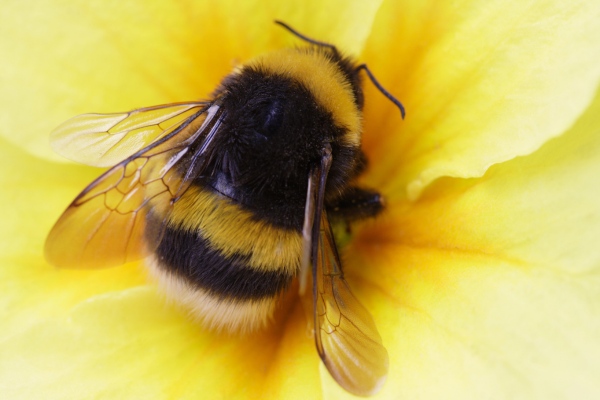
Bumble bees belong to the Apidae family and have a round, fuzzy body with black and yellow stripes. They are excellent pollinators and are known for their distinctive buzzing sound.
- Size: About half an inch
- Behavior: Generally friendly, but can sting when threatened
- Habitat: Nest in the ground, abandoned rodent burrows, or under sheds/decks
- Location: North and South America, Europe, and Asia
- Sting: Can sting if provoked
Carpenter bees
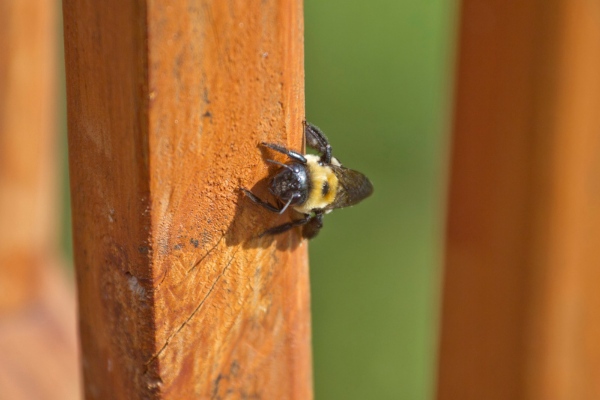
Carpenter bees are a larger species of bee in the Apidae family. Due to their size and coloring, they are often mistaken for bumble bees.
- Size: Around one inch long
- Behavior: Solitary; males may seem aggressive, but are generally harmless
- Habitat: Bore into wood to create tunnels for nesting, often in decks, eaves, fences, or siding
- Location: North and South America, Europe, and Asia
- Sting: Males don’t sting; females can sting but usually won’t unless provoked
European honey bees
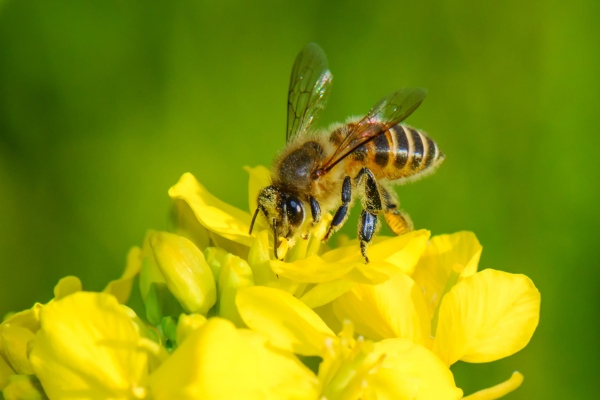
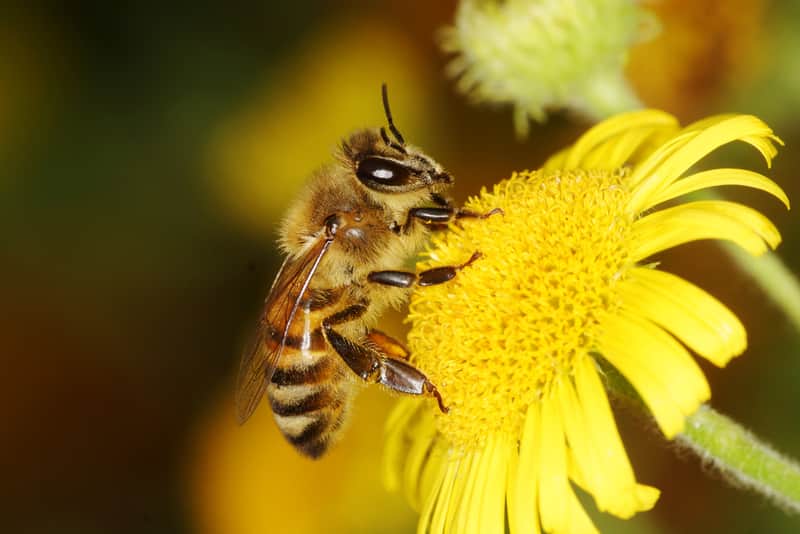
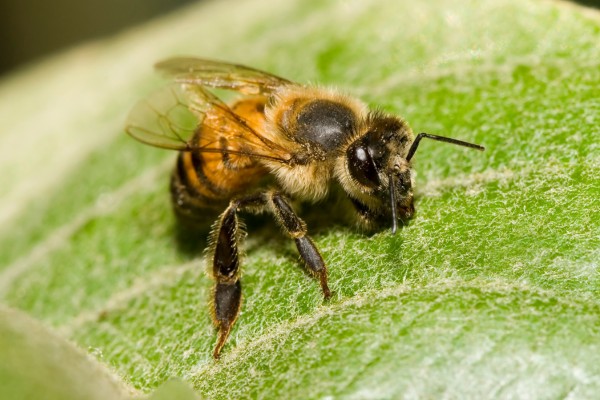
European honey bees belong to the Apidae family and are one of the most common types of bees known for producing honey. These pollinators have a robust, hairy body with amber and black stripes.
- Size: About half an inch long
- Behavior: Social, generally gentle unless defending their hive
- Habitat: Hollow trees, wall voids, and attics
- Location: Found throughout the U.S. in urban, suburban, and rural areas
- Sting: May sting when threatened, but can only sting once, and then it will die
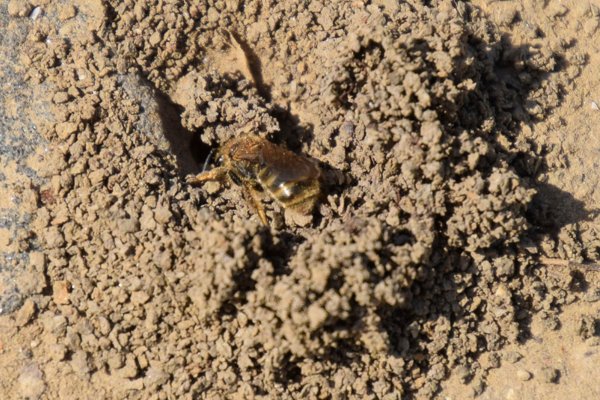
Ground bees
Several species of bees, commonly called ground bees, make their homes in the ground. Their body shape and size can differ drastically. Some look similar to honeybees, but others can be metallic green, purple, and blue in color with little hair.
- Size: Around half to ¾ of an inch long
- Behavior: Solitary, and generally not aggressive
- Habitat: Nest in dry, sandy, or loose soil in lawns, gardens, and fields
- Location: Can be found throughout North America, Europe, and Asia
- Sting/bite: Rarely stings unless disturbed
Japanese honey bees
Japanese honey bees are part of the Apidae family and have a slender, elongated body with bands of yellow and brown on their abdomen. These bees defend themselves from northern giant hornets by swarming around them in a tight ball. They create heat and raise carbon dioxide levels, which kill the hornet.
- Size: About half an inch
- Behavior: Social; known for their unique group defense against hornets
- Habitat: Nest in hollow trees, crevices, or man-made hives
- Location: Native to Japan and parts of East Asia (not found in the wild in the U.S.)
- Sting/bite: May sting when defending their hive
Lesser-known bee varieties
Less common types of bees, like mining and leafcutter, are important solitary pollinators. Mining bees nest in the ground, digging small tunnels in sandy or loose soil, and are active early in the spring, helping pollinate fruit trees and wildflowers. Leafcutter bees nest in hollow stems or wood crevices, cutting neat circles from leaves to line their nests. Both play valuable roles in pollination, even though they’re not as noticeable as honey bees or bumble bees.
The three types of bees in a honey bee colony
A bee colony consists of a queen bee, worker bees, and drones, each with a specific role. The queen bee is larger than the worker bees. She has a longer, more slender body and wings that extend beyond her abdomen.
Worker bees are smaller, with shorter, rounder bodies and wings that barely reach the tip of their abdomen. They gather pollen and nectar, feed the young, and keep the hive clean. Drones are the male bees. They have stout bodies, large eyes, and are slightly larger than workers but smaller than the queen. Their sole purpose is to mate with a queen. Drones do not have stingers.
Bees vs. wasps vs. hornets
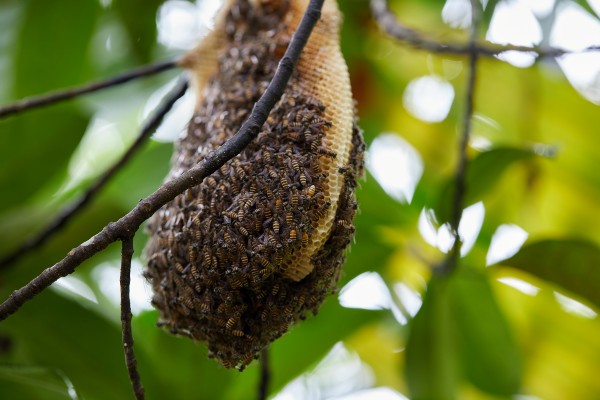
Although there are many types of bees, wasps, and hornets, some key differences can help you tell them apart. Bees are typically plump and fuzzy, while wasps and hornets are more slender and have a smooth, shiny appearance.
Wasp nests vary depending on the species, though many nest in the same areas as ground-nesting bees or void-nesting bees. They are usually solitary and fairly non-aggressive. Hornets and Paper wasps (including yellowjackets) build nests out of grey or reddish-tan paper and will defend their nest violently.
Bees are generally less aggressive and sting only if they feel threatened, while wasps and hornets tend to be more aggressive and may sting unprovoked. If you’re unsure which kinds of bees you’re dealing with, it’s best to keep your distance and contact a professional for help.
What to do if you see bees
If you have bees on your property, it’s essential to identify the species. Different types of bees have different behaviors and require specific approaches. It’s also important to remember that not all bees cause harm. Many are valuable pollinators and a welcome addition to your yard or garden. However, if a nest is close to your home, children, or someone with an allergy, it’s best to contact a professional.
DIY removal attempts can be dangerous and may harm beneficial bees or cause aggressive behavior, increasing the risk of stings. Terminix offers specialized bee control services tailored to your property’s needs. Our trained technicians can accurately identify stinging insects and use safe, responsible methods to remove or relocate bees when possible, helping to protect both your family and these essential pollinators.


.jpg?rev=cf6f123d3fd24a0889466548f01c0e92&hash=A0938025CA20160BF5A24A90DE4D68A6)