Bug Facts
The spider molting process
Content Updated: September 15, 2025
Like all arachnids, spiders begin life as eggs. How do they grow into the eight-legged, web-weaving expert hunters familiar to homeowners? The key is molting, which is the process of shedding an outer layer or exoskeleton to allow for growth. Like reptiles, amphibians, and arthropods — from cicadas to crabs — spiders shed skin at key points in their life cycle.
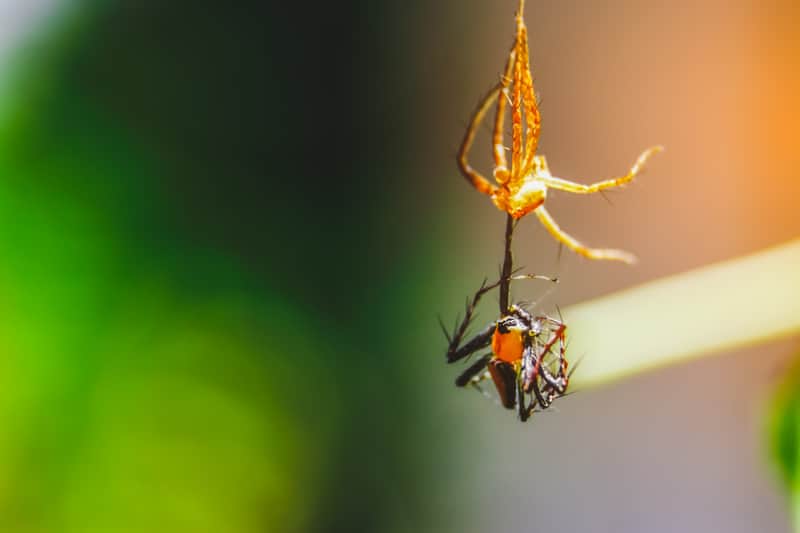
Do all spiders molt?
Yes. If spiders didn’t "shed their skin," they couldn’t grow. Consider that some tarantulas grow to be as large as four or five inches across, with a leg span of up to seven inches, and it becomes easier to answer, “Why do spiders molt?”
Spiders do not have skin or an internal skeleton like mammals; instead, they possess an exoskeleton made of chitin, which serves as both structural support and protection from predators. This hard outer layer does not grow with the spider, so it must periodically undergo spider molting. This process involves the spider shedding skin and ultimately shedding its exoskeleton to allow for growth. For example, brown recluse spiderlings remain with their mother for the first one or two molts before dispersing, and these spiders typically molt five to eight times before reaching maturity, while other species may molt up to a dozen times during their lifespan.
How does the spider molting process work?
As the spider grows, it will need to shed its exoskeleton. This process is initiated by hormonal changes and can last anywhere from a few hours to several days. The spider's exoskeleton consists of two layers — an inner, elastic layer and an outer, rigid layer. When spiders start shedding skin, the inner layer is broken down, and the spider reabsorbs the nutrients it contains for later use. Then, the spider secretes a larger, soft exoskeleton that is ready to expand after the old one is cracked open using the pressure of its blood and air intake. Although this process may cause some discomfort, it isn't typically painful. Once the new exoskeleton hardens to the right firmness, the spider's molting process is complete.
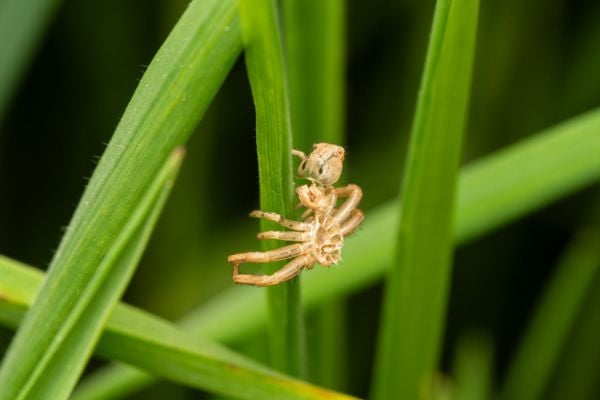
What does it look like when a spider sheds its skin?
During the spider molting process, a spider often turns on its back, leaving behind a perfectly molded, translucent shell that resembles the spider itself. This is quite different from observing a dying spider, as a dying spider may appear limp and inactive, lacking the vigorous movement seen when a spider's shedding skin. Prior to molting, spiders may stop eating and become less active. After molting, the spider emerges with a softer, lighter-colored exoskeleton that may appear glossy and more vibrant.
The risks of molting
Spiders have a fascinating ability to lose and regenerate their legs through a process called autotomy, which they may utilize as a defense mechanism against predators. When threatened, a spider can intentionally detach a leg to facilitate its escape. This lost leg has the potential to regrow when spiders start shedding their exoskeleton, although the new leg may initially be smaller and not quite as functional as the original.
However, the molting process itself can be dangerous for spiders. It takes considerable time to complete, and during this duration, they shed their protective exoskeleton, leaving them vulnerable to attacks from predators. The only protection they have is their soft, newly formed exoskeleton, which hasn’t yet hardened. According to Cornell University, around 85 percent of arthropod deaths occur during this critical molting phase. Some spiders may struggle to extract themselves from their old exoskeletons, leading to potential mutilation or suffocation if they are unable to complete the process successfully.
Many spiders adopt protective behaviors during molting. For example, tarantulas may seal the entrances to their burrows with silk to avoid disturbances, while other spiders may lower themselves on a silk line to stay out of reach of predators. During this process, maintaining proper humidity levels is essential. Moisture helps keep the exoskeleton pliable, facilitating easier shedding.
To learn more about these fascinating creatures, check out this article on spider eggs.