Education
Common venomous snakes in the US
Learn how to spot the four types of venomous snakes in the U.S. and what to do if you see one near your home.
Updated: June 27, 2025
When you’re hiking, working in the yard, or even just relaxing outdoors, coming across a snake can be startling. While most snakes in the U.S. are non-venomous and harmless, it’s still smart to know how to identify the ones that aren’t. Spotting the signs of a venomous snake can help you stay safe and avoid unwanted encounters.
Despite what some may call them, snakes aren’t technically poisonous—they’re venomous. The difference? Poison is harmful when ingested or touched, while venom is injected, typically through a bite or sting. So, when we talk about “poisonous snakes,” we really mean snakes with venom.
Most venomous snakes in the U.S. share a few general features. These can include a triangular or broad head, elliptical (cat-like) pupils, and heat-sensing pits between the eyes and nostrils—especially in pit vipers like rattlesnakes, copperheads, and cottonmouths. Many also have distinctive color patterns or warning behaviors, like rattling tails or flattened postures.
So, let’s walk through the major venomous snake types found in the U.S., how to identify them, and where you’re most likely to spot them.
Identifying the types of venomous snakes in the U.S.
Venomous snakes use their venom to immobilize prey and defend themselves. Their venom can vary in strength and effect, from mild discomfort to serious medical emergencies. In the U.S., there are four main types of venomous snakes to watch for, each with unique traits that can help you tell them apart. Most bites occur when a snake is surprised or feels threatened, which is why identification and distance can make all the difference.
Rattlesnakes
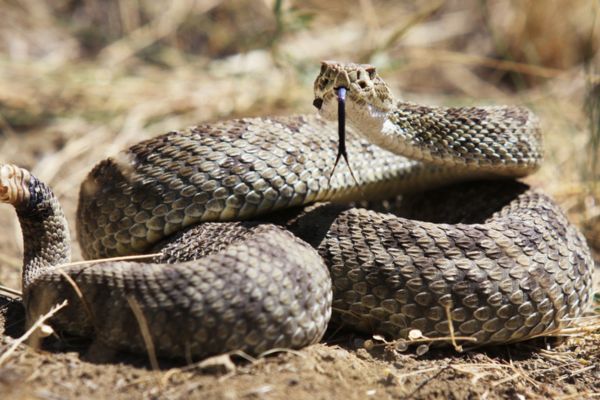
Rattlesnakes are the most widespread venomous snakes in the U.S., with species found throughout the Southwest, West, and parts of the South and Midwest. They’re best known for the rattle on their tail, which they use as a warning when they feel threatened. Not all rattlesnakes rattle before striking, so don’t rely on sound alone.
Key traits include a broad, triangular head, thick, heavy body, and dark diamond or blotchy patterns along the back. They prefer dry, rocky areas, but may also be found near wooded trails or sunny spots where they can bask. Rattlesnakes can strike from surprising distances.
Copperheads
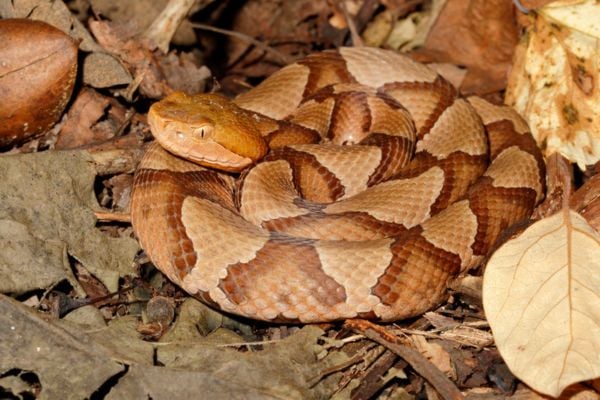
Copperheads are most common in the Eastern and Southeastern U.S., often found in wooded areas, leaf litter, or even suburban brush piles. They get their name from the coppery, reddish-brown color of their head, which matches their patterned body of hourglass-shaped bands.
Unlike rattlesnakes, copperheads don’t usually give a warning before biting. Their coloring provides excellent camouflage, so they’re often stepped on or startled by accident. Their venom is relatively mild compared to other U.S. species, but bites can still be painful and require medical attention.
Cottonmouths (water moccasins)
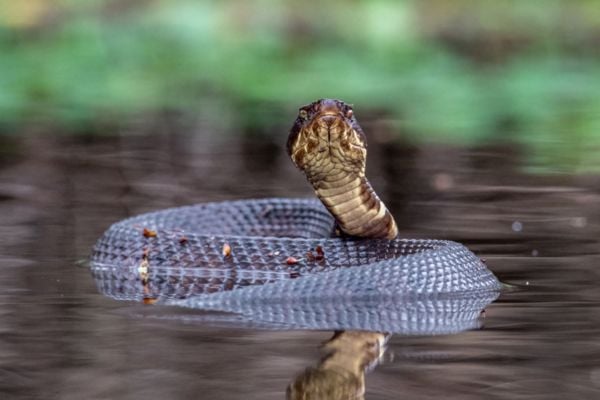
Cottonmouths—also known as water moccasins—are venomous semi-aquatic snakes found in the Southeastern U.S., especially in or near swamps, ponds, rivers, and lakes. They’re named for the bright white interior of their mouth, which they display as a defensive warning.
These snakes are typically dark brown, olive, or black, often with faint banding. They have thick bodies and large, triangular heads. Unlike many non-venomous water snakes, cottonmouths often float with their heads above water and may stand their ground when approached. Not sure what you're looking at? Here’s how to tell the difference between a cottonmouth and a water snake.
Coral snakes
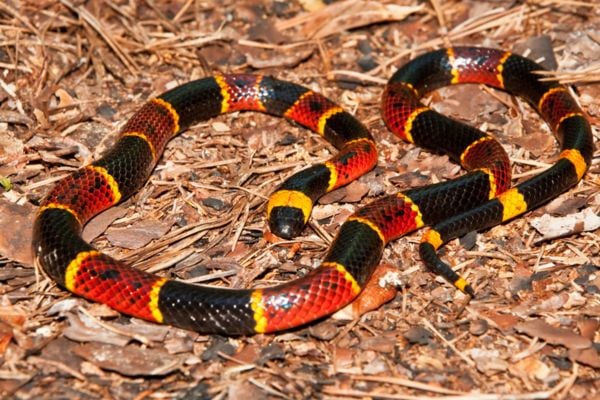
Coral snakes are found primarily in the Southeastern U.S., especially Florida and parts of Texas, though sightings are less common than those of other venomous species. They’re slender, reclusive, and known for their bright red, yellow, and black bands.
The classic rhyme—“Red touch yellow, kill a fellow; red touch black, friend of Jack”—can help distinguish coral snakes from lookalikes like the harmless king snake. But be cautious: not all coral snakes fit the rhyme perfectly, and you should avoid handling any similarly patterned snake.
Coral snakes are typically found in sandy, wooded, or brushy areas and tend to stay hidden under leaves or logs. While they’re not aggressive, their venom is potent and should be taken seriously if a bite occurs.
What to do if you think you see a venomous snake
If you think you’ve spotted a venomous snake, the safest thing to do is keep your distance. Most bites happen when people try to handle or kill a snake, so resist the urge to get close—even non-venomous snakes may defend themselves if they feel threatened. Here’s what to do instead:
- Back away slowly: Don’t make sudden movements. Give the snake space to move on.
- Do not attempt to touch or trap it: Even experienced handlers use specialized tools.
- Alert others nearby: Let people and pets know to avoid the area.
- Call a wildlife professional: If the snake is inside your home or not leaving on its own, a trained expert can safely remove it.
- Take preventative steps: Clean up yard debris, seal foundation gaps, and reduce rodent activity to make your property less appealing to snakes.
Most snakes want to avoid you as much as you want to avoid them. But if you’re dealing with frequent sightings—or want peace of mind that your home is protected—professional help can make all the difference. Learn more about how to keep snakes away from your property or contact Terminix for personalized help with wildlife prevention.