Beetles
Carpet beetle (Dermestidae)
Learn more about carpet beetles, fiber-eating insects found throughout the world, and how to deal with them.
Content Updated: October 1, 2025
Key takeaways
- Carpet beetles are small, oval-shaped insects with the ability to fly.
- If you notice damage to your fabrics or shed larval skin, it’s possible that you have a carpet beetle infestation.
- The larval stage is the most destructive, as carpet beetle larvae feed on natural fibers and materials.
- Though carpet beetles aren’t dangerous to humans, they can still wreak havoc upon clothing, furniture, and more.
- If you’re facing a carpet beetle infestation, the most reliable solution is to employ a pest control specialist.
Jump to section:
- What does a carpet beetle look like?
- Signs of carpet beetles
- Carpet beetle behavior and habitat
- How do I get rid of carpet beetles?
Carpet beetles, also known as skin beetles, are insects belonging to the Dermestidae family. While certain carpet beetles are employed in forensic entomology for their association with decay, and others are used for taxidermy or cleaning animal skeletons, others still are known as pests for their consumption of natural fibers in homes and businesses. Here’s what you should know about these scavenging insects.
What does a carpet beetle look like?
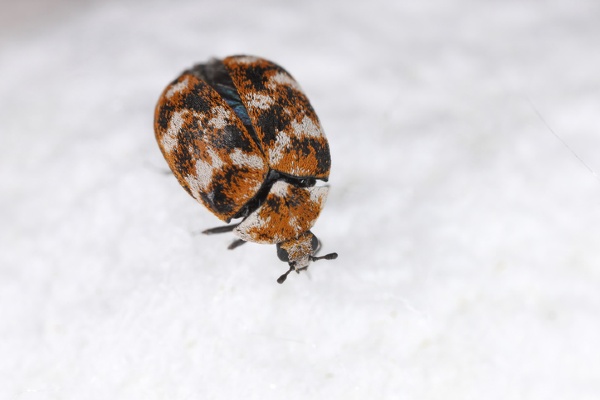
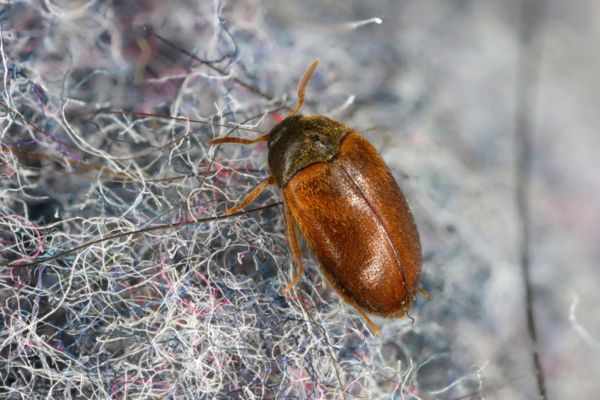
Though there are over 1,800 species of carpet beetles, there are still a few key shared characteristics between all members of the Dermestidae family:
- Color: They’re usually brown, black, white, or yellow. Furniture and varied carpet beetles can have unique, colored scales.
- Size: Carpet beetles are smaller than most other beetles, ranging from 1 to 12 mm long as adults.
- Antennae: They have clubbed antennae that fit into a groove on the underside of the thorax.
- Shape: Adult carpet beetles are generally flat and oval-shaped.
- Flight: All adult carpet beetles have wings and are capable of flying.
Carpet beetles vs. bed bugs
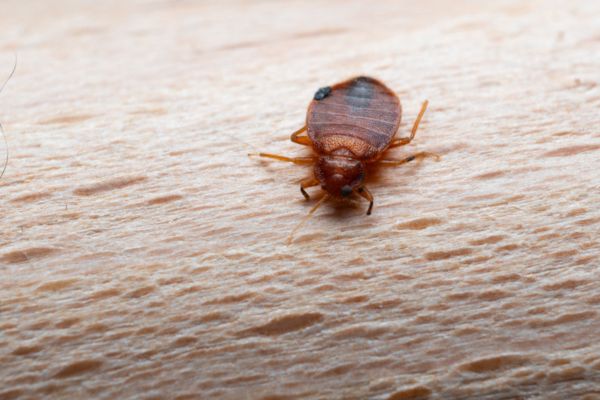
Carpet beetles and bed bugs are similar in shape and size, and both are often found among furniture if they’ve invaded, so it can be easy to mistake one for the other. However, there are a few key differences between the two:
- Appearance: Carpet beetles are typically spotted or striped, and bed bugs are translucent. Bed bugs can also be the slightest bit larger.
- Active hours: Carpet beetles are diurnal, meaning they’re active in the daytime, while bed bugs are nocturnal, which means they’re active at night.
- Diet: Bed bugs feed on blood, as they need blood meals to reproduce and grow. Carpet beetles typically feed on fibers and fabrics as larvae, and pollen as adults.
- Mobility: While carpet beetles are capable of flight, bed bugs are not.
- Threat level: Bed bugs are a greater threat to humans than carpet beetles, due to the former’s tendency to feed on humans.
- Habitat: Though both carpet beetles and bed bugs can be found among furniture, carpet beetles prefer carpets and fibrous materials, while bed bugs often reside in mattresses or near beds.
Signs of carpet beetles
Being able to identify the presence of carpet beetles early is essential for minimizing damage. The earlier you can spot them, the earlier you can take action. Here are a few carpet beetle signs to keep an eye out for:
- Damage to clothes or blankets
- Thinning on carpets or rugs
- Clusters of holes in fabrics
- Shed larval skins that are translucent with a yellow or brown hue
- Small fecal pellets that resemble black or brown specks of sand
Are carpet beetles dangerous? Do they bite?
Carpet beetles are not known to bite humans, and they’re not known to pose any health risks, either. The primary reason carpet beetles are considered pests is due to their diet. When they make their way into homes, their consumption of fiber makes them more of a threat to your clothes than to you.
However, skin irritation known as carpet beetle dermatitis can result from exposure to carpet beetle larvae in individuals with allergies to their small hairs. They can also contaminate food sources with feces and saliva.
Carpet beetle behavior and habitat
Carpet beetles are widespread insects that can be found across the world, though they prefer temperate regions. As a worldwide pest, the main thing they’re looking for when they make their way indoors is an ideal environment for them to eat and reproduce. This means they’re attracted to warm, dark, or cluttered areas where there’s limited human activity and an abundance of organic materials, such as:
- Dark corners and storage areas
- Closets and attics
- Areas near windows or doors
- Soft furnishings, such as carpets and rugs
- Places with lint, hair, and food debris
Diet and feeding habits
As infamous as they are for destroying fabrics, it’s primarily the larvae that feed on natural fibers. Adult carpet beetles tend to feed on pollen.
The fibers that carpet beetle larvae feed on include:
- Wool
- Silk
- Fur
- Cotton
- Feathers
- Linen
This means all sorts of furniture, carpeting, clothing, and bedding are prime targets for a hungry carpet beetle.
Life cycle and reproduction
Carpet beetles undergo four main stages of life.
- Egg: During warmer seasons, carpet beetle females lay 50-100 eggs near food sources. These eggs hatch in about two weeks.
- Larvae: This is the most damaging stage for humans, as larvae feed extensively on natural fibers and materials.
- Pupae: When larvae mature, they enter the pupal stage, in which they undergo metamorphosis into adults.
- Adult: Carpet beetles can fly as adults and prefer to find their way outdoors to feed on pollen.
Depending on the species, life cycle completion can take anywhere from two to three years, or there could be multiple generations within a single year. Temperature can also influence the duration of different stages, with higher temperatures generally decreasing development time.
How do I get rid of carpet beetles?
It can be frustrating to find your home infested with carpet beetles. Some preventative measures you can take include regular cleaning and vacuuming, proper storage of food, and sealing entry points. When it comes to getting them out of your house, here are a few steps you can take:
- Vacuum all carpets, furniture, and other fabrics. Vacuuming areas and fabrics where carpet beetles frequent can suck up the bugs themselves, as well as the organic matter that attracts them.
- Steam clean carpets, if possible. Whether you do so yourself or get them cleaned professionally, steam cleaning is an excellent way to ensure the absence of carpet beetles.
- Wash clothes, linens, and fabrics in hot water. Heated laundering can eliminate any bugs or larvae that may be hiding and can help prevent future infestations.
- Spread boric acid on carpets and fabrics. If vacuuming alone has still left behind some carpet beetles, you can use boric acid, which is lethal to insects and non-toxic to humans.
If nothing seems to be working, it may be time to employ a professional pest control service. At Terminix, we offer reliable and efficient treatments to help get these scavenging, fiber-eating insects out of your living space. Our PestFree365 pest control plan offers better protection for your home, inside and out, covering 25 common household pests including carpet beetles, cockroaches, mice, and more.