Japanese beetles
(Popillia japonica)
Content Updated: July 30, 2025
Though Japanese beetles, with their iridescent green and copper coloring, may be pretty to some, they’re also a nuisance to many. In fact, they’re considered an invasive species in the United States. Feeding on over 300 plant species, Japanese beetles are pests known for wreaking havoc and causing significant damage to crops, landscape plants, and lawns across the U.S. Learn more about their behaviors, habitats, how to spot them, and how to prevent them.
Jump to section:
- Japanese beetle identification
- Japanese beetle habitats and behavior
- Signs of Japanese beetles
- How to get rid of Japanese beetles
Japanese beetle identification
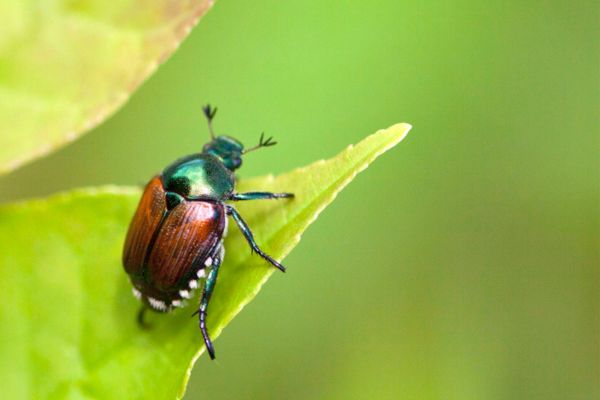
Japanese beetles can be difficult and costly to control, so it’s important to identify them as soon as possible. Here are a few key characteristics to keep an eye out for:
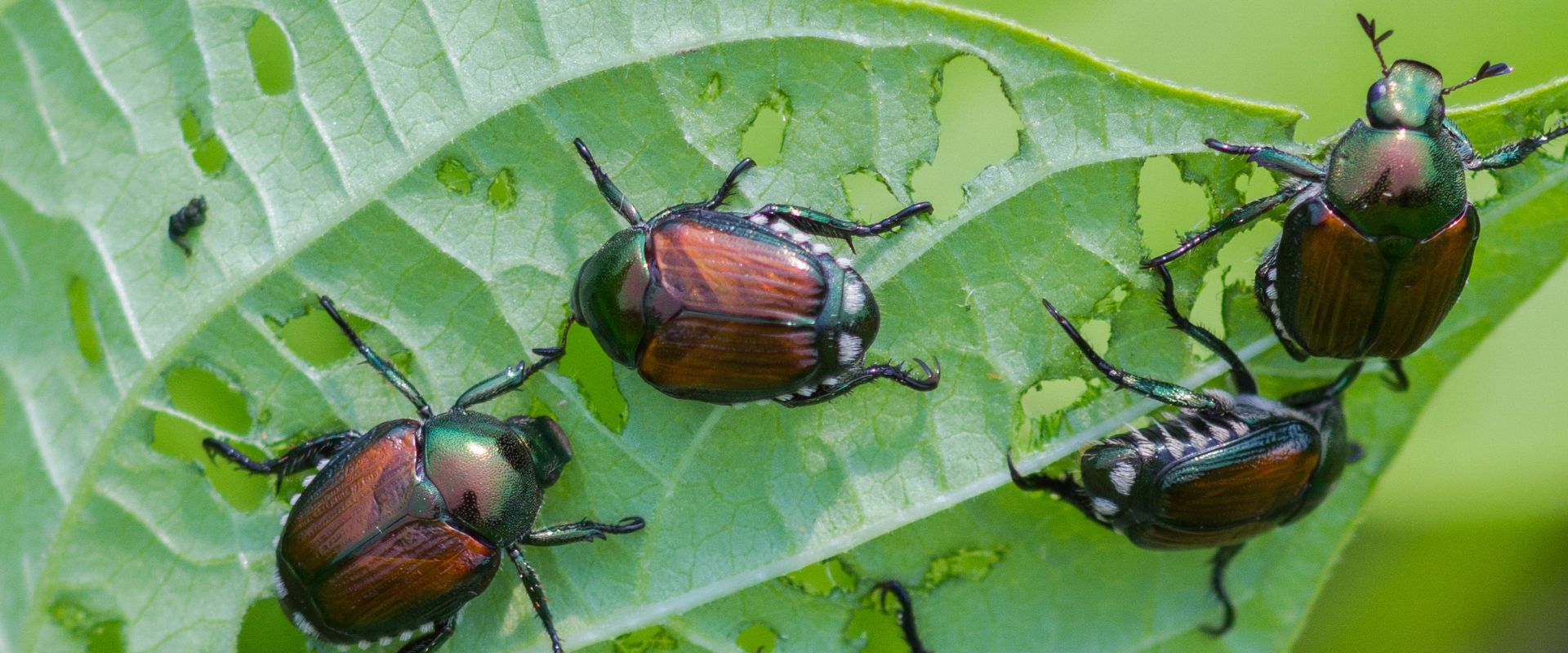
- Size: Adult Japanese beetles are between one-third and one-half of an inch in length. Females are typically larger than males, and larvae are about one inch long.
- Color: These beetles are known for their iridescent,metallic green bodies with copper-colored wings. The larvae are white with light brown heads and grayish bottom tips.
- Shape: Adults have six legs and tiny patches of white hair under their wing shields. The tips of their antennae (feelers) can also open like a fan. Larvae are typically curled into a C-shape.
Japanese beetles vs. ladybugs
Two groups of insects that are occasionally mistaken for one another are Japanese beetles and ladybugs, also known as ladybird beetles. Proper identification can be vital for protecting your garden and property. Thankfully, they are different in many ways:
- Size: Japanese beetles are larger than ladybugs. Ladybugs are also much rounder.
- Color: Japanese beetles are primarily a metallic green, while ladybugs often have spots and are typically red, orange, yellow, or black.
- Diet: While Japanese beetles eat plants, making them pests, ladybugs feed on aphids and other small pests, making them beneficial in most gardens.
- Behavior: Japanese beetles often swarm, while ladybugs are much more solitary in nature.
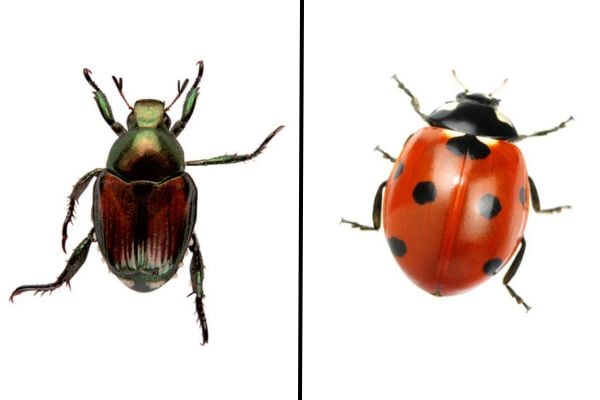
It’s important to be able to tell the difference between Japanese beetles and ladybugs, especially because one can cause more harm than the other. If you spot a ladybug in your garden, you can leave it be. On the other hand, if you spot a Japanese beetle, it’d be best to act right away.
Japanese beetle habitats and behavior
Japanese beetles are native to Japan, and were first accidentally brought over to the U.S. in 1916—likely through iris bulbs and nursery stock shipments. The first recorded sighting of a Japanese beetle in the U.S. was in a nursery near Riverton, New Jersey.
Nowadays, they can be found in over 35 states, all east of the Rocky Mountains. Japanese beetles thrive in areas with steady precipitation and soils that have an average temperature between 64 and 82 degrees Fahrenheit. They’re most active in the summer months, with their peak feeding times being from late June to August or September.
As an invasive species, there are very few predators, diseases, or resistant plants that can deter Japanese beetles in the U.S. Consequently, they can be extremely destructive and cause severe damage to turf, landscape, and ornamental plants, as well as fruits, gardens, and other crops—especially because they tend to travel and feed in packs. Though there are many animals in the U.S. that eat Japanese beetles, such as birds, spiders, and skunks, they’re unable to eat them as fast as they damage crops and plants.
Diet and feeding habits
As mentioned above, Japanese beetles can feed on over 300 types of plants, causing significant damage to gardens and vegetation throughout the U.S. Damage to leaves and plants done by Japanese beetles emits an odor that causes beetles to aggregate, worsening the pest problem.
As larvae, Japanese beetles feed on the top two to four inches of soil and mainly eat the roots of plants. Adult Japanese beetles feed on the leaves, flowers, and fruits of all kinds of plants, including:
- Roses
- Grapes
- Corn
- Beans
- Basil
- Tomatoes
Peak feeding hours are at full sun, when it’s hot and bright.
Life cycle and reproduction
Eggs hatch in late summer, 10–14 days after they’ve been laid, and the hatched grubs start feeding on roots. Mature grubs overwinter below the frost line and resume their feeding in spring. By early summer, the grubs are ready to pupate, and adults emerge from late June into summer.
During the day, adults will feed and mate. Female Japanese beetles lay eggs in masses in soil cavities two to three inches underground. A single female can lay 40-60 eggs during her lifetime. In general, the Japanese beetle life cycle takes a year, but in the north, it can stretch up to two years. The average adult lives for 30–45 days.
Signs of Japanese beetles
Some of the most common signs of Japanese beetles in your garden include:
- Brown, spongy patches on turf
- Skeletonized, lacy foliage
- Thinned, yellowed, or wilted vegetation
- Dead plants
- Increased presence of grub-eating animals or birds
- An actual beetle sighting
Because of how destructive Japanese beetles can be, it’s important to be mindful of their presence so you can take action right away if you start noticing any problems.
Are Japanese beetles dangerous? Do they bite?
Although Japanese beetles can cause all sorts of damage to gardens, from larvae eating roots to adults eating leaves, they’re not known to bite or sting humans or animals. They also don’t carry or transmit harmful diseases. However, Japanese beetles do have spines on their legs that can result in prickliness on the skin, which some could perceive to be a bite.
Japanese beetles are particularly destructive to home lawns, golf courses, parks, and cemeteries. However, due to their diet, any problems they cause on your property are more likely to be cosmetic rather than permanent. They do not cause damage to homes or structures, only to plants.
How to get rid of Japanese beetles
If you’re having a problem with Japanese beetles, you might notice how hard it is to get rid of them. That’s because if you’ve been squishing them, you’re actually releasing a chemical scent that attracts other Japanese beetles, giving them further reason to congregate on your property.
If you notice Japanese beetles eating your plants, here are a few steps you can take right away:
- Hand removal: Physically removing the beetles from your garden can be an effective deterrent, especially if the beetle population on your property is low enough. Japanese beetles are slow and don’t bite, so you can pick them up and drop them into a soap-and-water solution to eliminate them.
- Set beetle traps: Japanese beetle traps can help prevent infestations from getting worse. By tricking male beetles and luring them away from affected areas before they can mate, you can prevent beetle populations in your yard from growing.
- Use a spray: Neem oil is nontoxic to humans and other mammals, so you can spray it right on your plants without worry. Neem oil gets passed onto Japanese beetle eggs when ingested, and this prevents larvae from becoming adults. It’s best to spray neem oil before mating begins.
- Attract birds: Putting bird feeders in your garden can attract helpful predators to chow down on pesky Japanese beetles.
- Plant geraniums: These plants are an effective way to keep Japanese beetles from killing any nearby plants. According to the U.S. Department of Agriculture, a beetle is paralyzed within 30 minutes of consuming geranium, leaving them vulnerable to predators or to otherwise succumb to death.
If you want to be proactive in protecting your garden from Japanese beetles, here are a few preventative measures you can take:
- Use row covers: During peak feeding times for Japanese beetles, row covers can help keep the pests out. However, note that they also keep pollinators out, so if you use row covers, be mindful of which of your plants will need pollination.
- Make careful plant selections: When deciding on what to grow in your garden, avoiding grouping together plants that Japanese beetles love can help effectively prevent Japanese beetles from making a feast of your yard.
- Apply ground treatment: Grubs and adults require different kinds of preventative and control measures. Ground treatments applied from mid-July to early September can help disrupt their lifecycle by eliminating grubs before they grow destructive.
When you’ve only got a few Japanese beetles to handle, it’s likely that DIY solutions can do the trick. When the number of Japanese beetles gets too high, though, getting professional help is the most reliable and efficient way to take back your property. If you’ve got a Japanese beetle problem, we can help.