Beetles
What sounds do beetles make?
From clicking to buzzing, beetles can make all kinds of noises. Learn more about the diversity of sounds that beetles can make.
Content Updated: September 26, 2025
Key takeaways
- Beetles are capable of a wide variety of sounds, thanks to their vast diversity.
- Clicking, buzzing, and chirping are some of the noises that beetles can make through means such as stridulation or percussion.
- Beetle sounds are often for communicative purposes, such as mating or group coordination.
- While beetles making noise outdoors is no cause for concern, if you're hearing beetles in your home, you may be at risk of an infestation.
- The most effective way to protect your home is with professional pest control services.
Jump to section:
- Types of beetle sounds
- How do beetles produce sounds?
- Why do beetles make noise?
- Abnormal beetle sounds
- What does it mean if you're hearing beetles?
If you've ever heard a beetle in your yard making noise—whether it was clicking, buzzing, or chirping—you may have wondered what it was up to. Just like how every word in human language can mean something unique, every sound a beetle makes can be for a different purpose.
Some beetles make noises to warn their fellow insects about predators, while others sound off to attract mates. Some use their sound to communicate with other beetles, and others still use it to ward off predators. If you want to know more about all the different sounds of beetles, here's our breakdown.
Types of beetle sounds
When it comes to the sound of beetles, there's a number of noises these insects can make, owed in part to their staggering diversity. In fact, many species of beetles are named after the specific noises they make! Here are some of the things that you might hear from these insects:
- Clicking: Click beetles, also known as Elateridae, are especially known for making clicking noises.
- Buzzing: The pitch and the length of the buzzing sound can vary from species to species.
- Hissing: Frequently employed when threatened or when seeking mates.
- Chirping: Often produced by the vibration of a beetle's wings when flying.
How do beetles produce sounds?
Different sounds require different mechanisms. Beetles vary widely in anatomy from species to species, allowing for the different noises associated with these insects. Some of their sound-producing methodologies include:
- Stridulation: One of the most common mechanisms for sound among all insects. Rubbing two body parts together can produce all sorts of sounds. Even among beetle families, different body parts can be used to achieve stridulation.
- Percussion: Certain beetles tap or drum parts of their body to make unique noises for communication purposes.
- Click mechanisms: Some beetles' thoraxes have a unique, hinge-like structure that allows them to generate a powerful click sound when a spine on the prosternum is released from a socket. The forcible expulsion of air or fluid can also create hissing or popping sounds.
Why do beetles make noise?
Like humans, beetles communicate through various means, and the sounds that beetles produce are one of the major ways in which they convey messages to one another.
- Mating calls: Males often produce calls to attract females, and interested females will respond.
- Alarm signals: If there's a threat, beetles can sound off to let other members of their species know.
- Predator deterrence: Sudden, startling noises can drive predators away.
- Territorial defense: A beetle defending its territory may produce noises to facilitate its defense.
- Group coordination: Social species can use sounds to facilitate working together.
Abnormal beetle sounds
- Bess beetle: Also known as the horned passalus or the patent leather beetle, these insects cause the “screaming beetle” phenomenon. Their screaming, which serves as a defense mechanism, is an intense squeaking sound produced by the rubbing of their wings or legs.
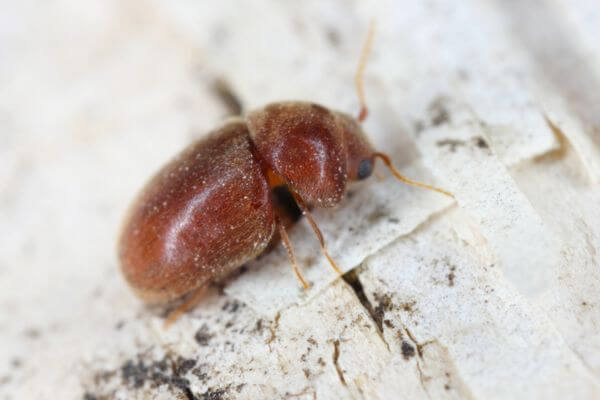
- Deathwatch beetle: These wood-boring insects attract mates by making a distinct knocking sound by tapping their heads against a substrate. This mating habit is what created the association with quiet, sleepless nights and vigils kept for the dying or dead that these beetles have.
- Tiger beetles: These beetles mimic toxic moths by producing a high-pitched, ultrasonic sound that wards off bats. To humans, this noise, made by striking the back edges of the elytra with the beating hind wings, will only sound like a faint buzzing. Interestingly, only nocturnal tiger beetles exhibit this mimicry.
What does it mean if you're hearing beetles?
Of course, hearing beetles while outside isn't usually anything to worry about. The true problem lies in when you start to hear beetles inside your home, since that means it's possible that you have an infestation on your hands. Some beetles can pose a great risk to you and your family's home and well-being, so it's important to act right away if there's a problem.
If you've started hearing beetles in your home, and it's not a matter of one or two accidentally sneaking in, it's in your best interest to work to get rid of them as soon as possible.
On top of identifying the beetle, cleaning, setting beetle traps, or utilizing neem oil, be sure to consult with a professional if the infestation is too severe. At Terminix, we're dedicated to helping you protect your home. If you're hearing beetles in your living space and need a hand, we're here to help.