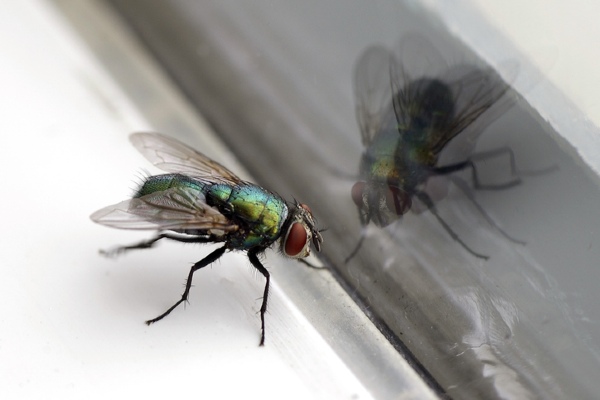
Learn more about the different types of flies in the United States.
Updated: October 20, 2025
Learn more about the different types of flies in the United States.
Key takeaways
- Biting flies and filth flies are two distinct kinds of flies, and both have the potential to be harmful to humans.
- Flies are insects that are members of the order Diptera, characterized by having a single pair of functional wings, compound eyes, and three main body segments.
- Filth flies are associated with unsanitary environments and are generally drawn to decaying organic matter.
- Biting flies often cause allergic reactions when they bite, and they typically need blood for reproduction.
Jump to section:
What makes a fly a fly?
Types of filth flies
Types of flies that bite
How to get rid of flies in the house
Flies are some of the most infamous pests out there, with over 120,000 species found worldwide. When it comes to flies invading your home, there are two primary distinctions that you’ll want to keep in mind: the difference between filth flies and biting flies.
Biting flies are attracted to the blood of humans and other animals, and their bites often cause pain or allergic reactions. On the other hand, filth flies are scavengers that feed on decaying organic matter. Both have the potential to be hazardous to human health, which is why it’s important to stay aware of the flies around you. Here’s what you should know about the different types of flies.
What makes a fly a fly?
Flies are characterized by their classification in the order Diptera. Some of the key features of this order include:
- A single pair of functional wings
- Three main body segments
- Large compound eyes
- Mouthparts are adapted for certain feeding methods
- Legs with claws and pads to grip surfaces
- Complete metamorphosis
Though there are many shared characteristics between flie species, they are still a notably diverse group of insects with a wide range of behaviours, diets, and habitats.
Types of filth flies
Filth flies are often associated with unsanitary environments, since they’re drawn to and reproduce in decaying organic matter such as garbage, animal waste, and rotting food.
On top of being a nuisance, these insects can be major health hazards by spreading disease-causing organisms. After landing on contaminated materials, pathogens and bacteria can adhere to their bodies and be carried to humans and their property.
House flies
Physical characteristics: Gray to black in color, about 0.2 to 0.3 inches in length, reddish compound eyes, and four stripes on their thorax
Location:The entire United States.
Lifespan: 15-30 days. Females lay up to 500 eggs in their lifetime, and they hatch within hours.
What attracts them: Food waste, compost piles, moisture.
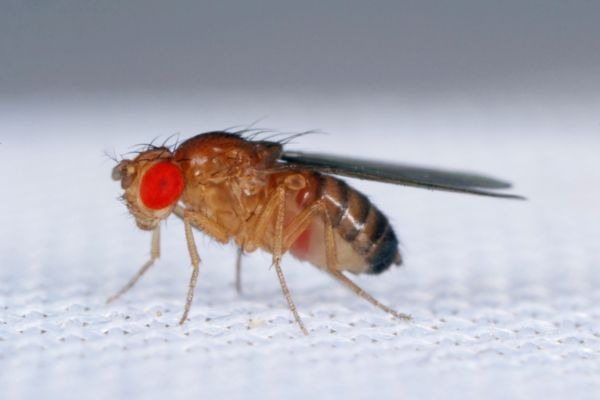
Physical characteristics: About 1/8 of an inch long, compact and rounded body, primarily yellowish-brown in color.
Location: The entire United States.
Lifespan: 30 days. Females can lay thousands of eggs in a single lifetime, and they hatch within 24-30 hours.
What attracts them: Overripe or fermenting fruits and vegetables, sugary spills.
Physical characteristics: Gray to black in color, antennae longer than their heads, weak fliers, long dangling legs, about 1/16 to 1/8 of an inch in length.
Location: Southeastern regions of the US.
Lifespan: One to two weeks. An adult female can lay over 200 eggs, which hatch in about four to six days.
What attracts them: Overwatered houseplants, moist soil.
Drain flies (Psychodidae spp.)
Physical characteristics: Also known as moth flies due to their furry appearance, causing them to resemble moths, around 1/5 to 1/6 of an inch in length, light gray to tan in color.
Location: The entire United States.
Lifespan: 21-35 days. Females lay between 15-40 eggs, which hatch within two days.
What attracts them: Damp environments, clogged drains, stagnant water.
Phorid flies (Family Phoridae)
Physical characteristics: Black or brown—rarely yellow, orange, pale gray, or pale white in color, about 1/16 to 1/8 of an inch in length, humped thorax, known for rapidly running across surfaces rather than flying.
Location: The entire United States.
Lifespan: 14-37 days. A female can lay as many as 700 eggs that hatch within a day.
What attracts them: Clogged drains, coffins, decaying organic matter.
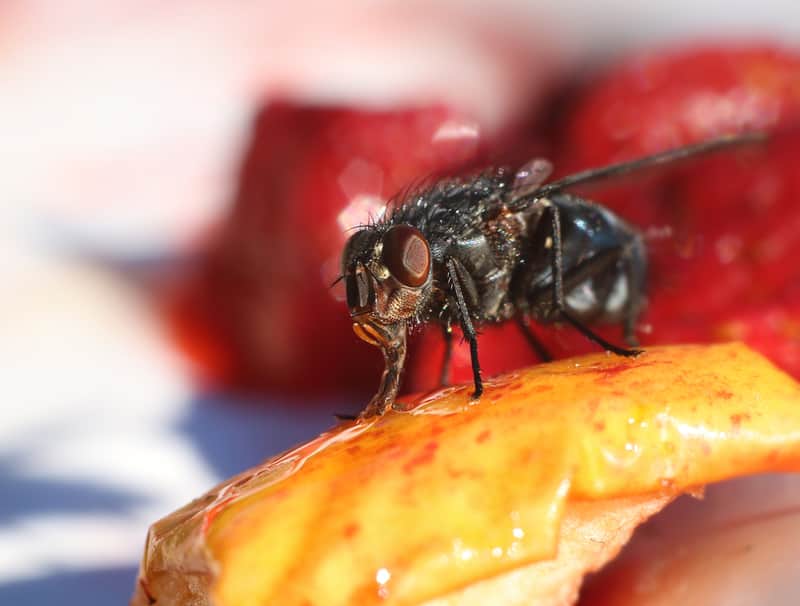
Bluebottle (blow) flies
Physical characteristics: Shiny blue, green, bronze, or black bodies, loud buzzing sounds, around 0.3 to 0.4 inches long, and large compound eyes.
Location: The entire United States.
Lifespan: 7-20 days. An adult female can lay 150-200 eggs at a time, and they hatch within 24 hours.
What attracts them: Spoiled meat, wounded animals, carrion, feces.
Cluster flies (Family Polleniidae)
Physical characteristics: Black or silvery checkered body, sluggish movement, about 0.3 to 0.4 inches in length, overlapping wings when at rest.
Location: The entire United States, except for the states bordering Mexico.
Lifespan: One to three months. Females lay around 130 eggs at a time, and these eggs hatch in around three days.
What attracts them: Warmth and light, plant nectar, fruits, sap.
Lesser house flies (Fannia canicularis)
Physical characteristics: Yellowish body, hovering flight pattern, around 0.2 inches in length, white-bordered eyes.
Location: The entire United States.
Lifespan: Two to three weeks. A female can lay up to 2,000 eggs in her lifetime, and they hatch in around two days.
What attracts them: Chicken manure, damp areas, compost bins.
Types of biting flies
Flies that bite are just one of many troubles that you can end up facing while outdoors. These bites typically occur due to flies requiring a protein-rich blood meal to reproduce—as a result, it’s often only the females that do the biting.
While some biting flies, such as mosquitoes, have mouthparts designed for piercing the skin, other biting flies will use cutting or scraping mouthparts to tear the skin to feed, which is often more painful. Both methods of biting can result in allergic reactions or the transmission of diseases.
Stable flies (Stomoxys calcitrans)
Physical characteristics:Piercing mouthpart for biting, grayish body with four stripes, red eyes, about 0.2 to 0.3 inches in length.
Location: Warm, humid environments.
Lifespan:20-30 days. Females require an intake of blood before reproducing, and they can lay 200-400 eggs at a time.
What attracts them: Livestock or animal waste, sweat or body odors, manure.
Horse flies (Family Tabanidae)
Physical characteristics: Scissor-like mouthparts used to slice the skin, up to 1 inch in length, dark-colored with powerful wings, green or black eyes.
Location: Warm, sunny regions near water.
Lifespan: 30-60 days. A female can lay up to 500 eggs in her lifetime.
What attracts them: Sweat or body odors, scent from pools, water.
Deer flies (Chrysops spp.)
Physical characteristics: Large and clear wings with dark bands, eyes display iridescent green or gold bands, 0.25 to 0.5 inches in length.
Location: Wooded areas near water.
Lifespan: 30-60 days. Females can lay between 100-800 eggs.
What attracts them: Carbon dioxide, dark colors, warmth.
Biting midges (Family Ceratopogonidae)
Physical characteristics: Around 0.03 to 0.1 inches in length, usually gray, black, or brown in color—can appear reddish when engorged with blood, humpbacked appearance
Location: Coastal areas, aquatic and semi-aquatic environments.
Lifespan: Two to seven weeks. Females lay 30-110 eggs per batch, which hatch within two to seven days.
What attracts them: Flower nectar, carbon dioxide, and heat.
Sand flies (Family Psychodidae)
Physical characteristics: Around 0.06 to 0.1 inches in length, light brown or gray in color, narrow wings, hairy bodies, long legs, and large black eyes.
Location: Tropical and subtropical regions.
Lifespan: 20-30 days. A female lays around 30-70 eggs in a single batch.
What attracts them: Humidity, shiny surfaces, carbon dioxide.
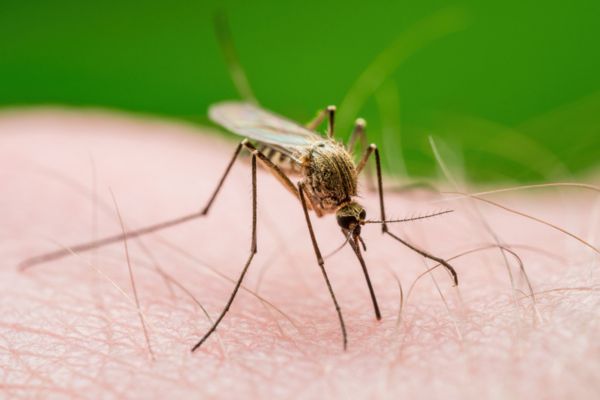
Mosquitoes (Culicidae)
Physical characteristics: Around 0.1 to 0.5 inches in length, scaly body, long legs, distinctive proboscis (mouthpart), gray or black in color.
Location: Warm, humid environments.
Lifespan: Females live up to two months, while males live around 10 days. Females typically lay around 100-300 eggs at a time.
What attracts them: Humidity, carbon dioxide, dark colors, sweat.
How to get rid of flies in the house
When it comes to getting rid of flies making their way indoors, here are a few things you can do to reduce their activity:
- Place homemade or store-bought traps around your property.
- Use natural repellents, such as essential oils like citronella, lavender, and peppermint.
- Remove standing water, fix leaks, and empty areas where moisture collects.
- Clean your house and eliminate food sources.
If you’re dealing with a serious fly problem and the above measures just aren’t cutting it, then it might be time to call in pest control experts. At Terminix, our experts will work with you to come up with a treatment plan that best suits your needs. Get in contact today.


.jpg?rev=52536dcccd9a484d87b247b3d638f99b)
.jpg?rev=569865521e0141c7a5436e29a08be937&hash=9872DC90F43C0C894D7F1EF575E60875)
.jpg?rev=8d05eaf276164b4b8b103e60f2f86122&hash=42456B418C2A8A586F6ED7EFF0BFE825)
.jpg?rev=8019f3d4165a42e8afa015c4bd24c3ee&hash=3BE7C833A6D58D7AA47A3CA1D822E6FB)
.jpg?h=400&w=600&rev=44cc5fc36e3b4c758363dea911d19611&hash=60A35D8FE5FB84AC4B10431A979D88BB)
.jpg?rev=bbb3bdd765b245fb9472d8d946a36395&hash=B7CB08DB1E6749EEE230C62918C8529D)
.jpg?rev=a40356f9418a41f09173b55f3ad3f410&hash=7B920BB2D96DE6310862CC0577F930F2)
.jpg?rev=107909974ce5429fab198107a2c4040c&hash=4050C7CBEB60B7CDCB9F78D147E6074C)
.jpg?rev=2e46359f43874a40853a6027de895f8b&hash=430472D0A494705E1CC8E2F12B2D6000)
.jpg?rev=d0f6d30cf4f7403cb3450d20fcca2561&hash=1374E4DDBF918E62A1C85CFD68DF243A)
.jpg?rev=f3405be1d35b4f86b1649cd8aae974eb&hash=DB919727067C38B72620DA63267CE301)
.jpg?rev=499ee19ee19d4826a6e1c557f54668c7&hash=4E7E6456B3705ACF050487C965BB8E4E)