Education
What do beetles eat? A guide to their diverse diets
With countless species of beetles, the beetle diet can vary greatly. Learn more about what beetles eat.
Content Updated: October 23, 2025
Jump to section:
The beetle diet is incredibly diverse. With more than 300,000 identified species of beetles—and possibly millions more undiscovered—these insects have developed a wide range of eating habits. Each species has its own preferences based on habitat, biology, and behavior. Some feed on plants, others hunt insects, and many consume decaying organic matter. With so many species and so many tastes, the answer to “What do beetles eat?” can be summed up in one word: everything.
Beetle diet breakdown
The easiest way to answer a question like "What do beetles eat?" is to break it down into smaller categories.
Beetles as herbivores
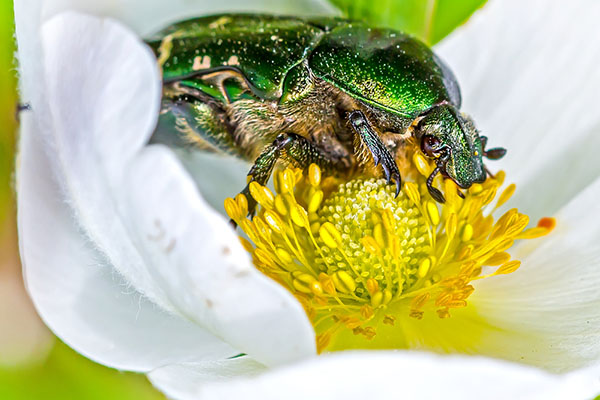
Most beetles are herbivores, eating only plants. This includes roots, stems, leaves, seeds, nectar, fruits, or even the wood of the plant itself. Common herbivorous species include the Japanese beetle, which feeds on leaves, flowers, and fruit. The Colorado potato beetle is another well-known example, often found damaging crops like potatoes and tomatoes. Other plant-eating beetles include the asparagus beetle, flea beetle, and various species of weevils and leaf beetles.
Beetles as predators
There are also a lot of beetles that are predators, including most species of ground beetles. Prey includes fly maggots, earthworms, snails, grubs, slugs, and even other species of beetles. These beetles play a key role in natural pest control, especially in gardens and soil ecosystems.
Some of the most notable predatory beetles include tiger beetles, fast runners that use their large mandibles to grab prey on the move. Soldier beetles and lightning bugs (also known as fireflies) help control aphid and caterpillar populations by picking them off plant leaves. Rove beetles, which resemble earwigs, are also effective predators, feeding on mites, maggots, and other small insects in soil and decaying material.
Blister beetles are also considered predators during their larval stage, feeding primarily on grasshopper eggs. While not dangerous, adult blister beetles produce a toxic chemical called cantharidin that can irritate human skin. However, no species of beetle actively feeds on humans. Most target smaller insects or organic material and pose no threat to humans in terms of direct feeding.
Beetles as scavengers
Beetle species that are saprophagous feed on dead organic matter, whether it’s plant or animal remains. This group plays an essential role in decomposition and nutrient recycling.
One well-known example is the dung beetle, which feeds on animal waste and is often seen rolling dung into balls to bury and use as a food source or breeding site. Hide beetles scavenge for carrion and use decaying meat to nourish their larvae. Burying beetles (also known as sexton beetles) go a step further—they locate animal carcasses, bury them, and prepare them as a food source for their young.
Beetles as wood destroyers
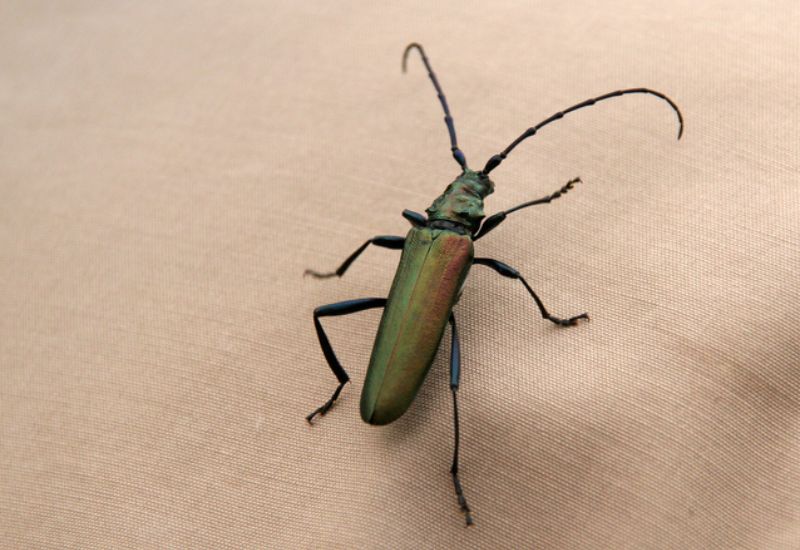
Wood-boring beetles, including powderpost beetles and longhorned beetles, can cause significant damage to homes and other structures. These beetles feed on structural wood, decorative woodwork, flooring, and furniture, and in some cases, they’re even found in newly built homes if infested wood was used during construction.
One particularly destructive species is the Asian longhorned beetle, an invasive pest known for boring deep into hardwood trees like maple, elm, and birch. While it poses a serious threat to forests, its presence near residential areas raises concerns about damage to landscaping and wooden structures. Infestations can be difficult to detect until damage is extensive, making early identification and treatment critical.
Beetles as connoisseurs
Some beetles have more specialized tastes. Certain species feed on fungus, such as the fungus beetle, which is typically found in damp, moldy areas. Others, like the whirligig beetle, are aquatic and may feed on small aquatic animals or decaying crustaceans. There are also parasitic beetles that prey on the larvae of other beetles, and textile-feeding beetles like the carpet beetle, which can damage clothing, upholstery, and stored fabrics in the home.
In addition, some beetles are known to infest human food sources. Grain beetles, for example, are common pantry pests that can contaminate cereals, flour, rice, and other dried goods. Once inside a home, they may reproduce quickly and become difficult to eliminate without professional help.
What the beetle diet tells us
According to recent theories from researchers at the University of California, Berkeley, the wide range of beetle diets may explain why there are so many species. If one group of beetles feeds on a particular plant and that resource becomes limited, some may adapt by switching to a new food source. Over time, those dietary changes can drive the evolution of entirely new species. In other words, what beetles eat may help explain how they’ve become one of the most diverse insect groups on earth.
While this is fascinating for entomologists, it’s not as exciting when you discover beetles eating their way through your pantry, wardrobe, or woodwork. At Terminix, we help protect homes from a wide range of beetles, including carpet beetles, grain beetles, powderpost beetles, Asian longhorned beetles, and more. Call today for a free pest control estimate.