Bed Bugs
What does a bed bug look like?
Learn more about how to identify bed bugs—hardy insects infamous for their itchy bites—and how to deal with them.
Content Updated: September 15, 2025
Key takeaways
- Bed bugs have flat, oval-shaped bodies and are around the size of an apple seed.
- Bed bugs undergo three main stages of life: egg, nymph, and adult.
- Bed bugs are attracted to people through body heat, scent profile, and Carbon Dioxide emission.
- If you are dealing with a severe infestation, the most reliable method to get rid of bed bugs is to consult with a professional pest control service.
Jump to section:
- What do bed bugs look like?
- How do I identify bed bugs by their life cycle stage?
- How do I tell if I have bed bugs in my home?
- How to identify different species of bed bugs
- What bugs can be mistaken for bed bugs?
- What to do if you've identified bed bugs
From disrupting sleep to causing itchy bites, bed bugs can quickly turn a comfortable home into a waking nightmare. If left untreated, bed bugs can quickly spread from mattresses, bedding, and luggage throughout your home and even to the homes of others.
That's why being able to identify them is so important—the sooner you catch them, the earlier you can act. Read on to learn more about bed bugs, including their behavior, appearance, preferred habitat, and the pests they're often confused with.
What do bed bugs look like?
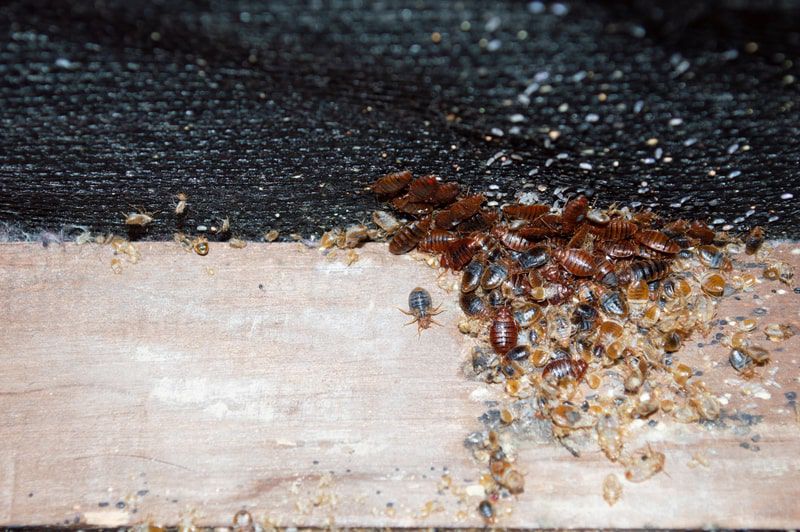
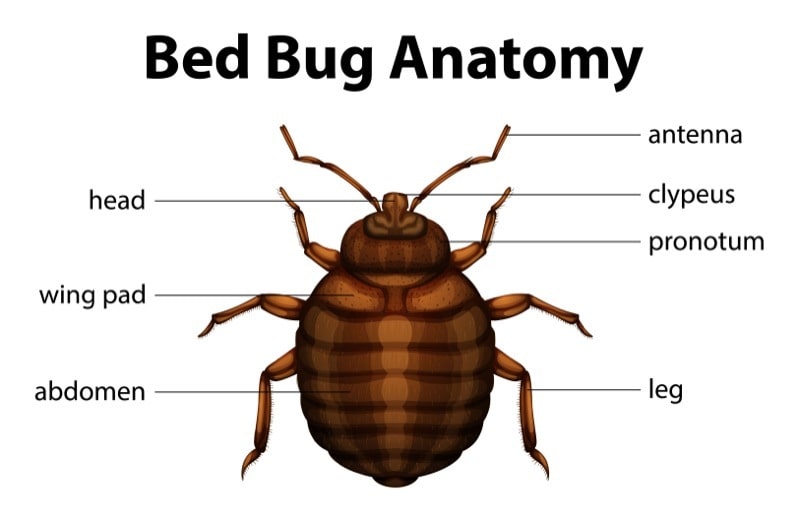
Bed bugs are small insects with flat, oval-shaped bodies, six legs, and two antennae. We're often asked, “Can you see bed bugs with the naked eye?” The answer is yes! Adults typically measure between a quarter and 3/16 of an inch long. They're about the size of an apple seed.
How do I identify bed bugs by their life cycle stage?
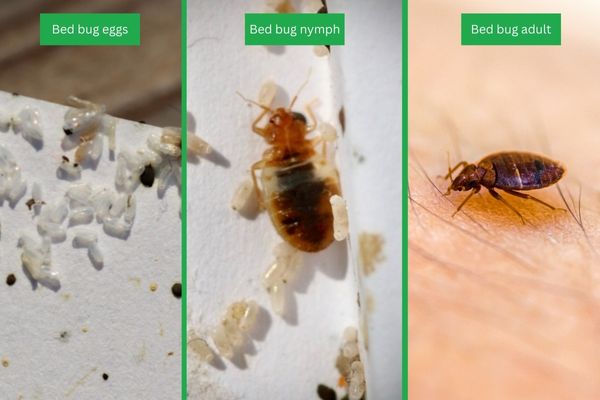
As bed bugs mature, their size and color change. Their life cycle consists of three main stages:
- Egg: Bed bug eggs are tiny, oval-shaped, and white. They resemble a grain of rice.
- Nymph: Nymphs are translucent or pale yellow and become darker as they feed on blood.
- Adult: Adult bed bugs are reddish-brown. They typically appear more engorged and reddish after they have fed on blood.
The bed bug picture below shows examples of what these pests look like as they grow.
How do I tell if I have bed bugs in my home?
Signs of bed bugs in your home can include:
- Bed bug exoskeletons: Finding discarded exoskeletons (cast skins) around your sleeping area or in other hiding spots can indicate an infestation.
- Blood stains on bedding: After feeding or getting crushed, bed bugs may leave behind small blood stains on your sheets and pillowcases.
- Fecal spots: Bed bug feces appear as small, dark spots on bedding, mattresses, or nearby furniture.
- Musty odor: A musty or sweet smell can sometimes indicate an infestation and should prompt further bed bug identification efforts.
- Bed bug bites: Waking up with red welts or clusters of bites can mean you've been bitten by bed bugs. However, not everyone has reactions to bed bug bites, and further inspection could be warranted.
- Spread to other areas: Bed bugs are great hitchhikers and can quickly migrate from infested mattresses, bedding, or suitcases to different parts of your home.
With that in mind, some of the things that attract bed bugs include:
- Warmth: These pests can detect body heat, which they use to locate potential hosts.
- Carbon dioxide: Bed bugs can detect carbon dioxide from several feet away.
- Body odors: Warm-blooded animals, especially humans, are the ideal source of blood meals for bed bugs.
How to check for bed bugs
Can you see bed bugs in other areas of your home? It's not always easy. Bed bugs hide in cracks, crevices, and other secluded areas during the day and only emerge at night to feed. If you suspect an infestation, here's what you can do to check your home for these pests:
- Gather tools: Flashlights, gloves, a magnifying glass, and a flat-edged tool for crevices are all useful for checking the small, dark areas that bed bugs like to hide.
- Check bedding: Mattresses, pillows, and sheets are ideal places for a bed bug to stay. Be sure to examine seams and tags, as well.
- Inspect furniture: The bedframe and headboard are important pieces of furniture to check for bed bugs. Upholstered furniture or anywhere there's clutter should also be examined.
- Look for signs: Rust-colored stains, pinpoint dark spots, shed skins, and eggs are all signs of bed bugs that you can keep an eye out for.
If you see any bed bugs or evidence of bed bugs, it's recommended to get the help of a professional pest control service right away.
How to identify different species of bed bugs
A bed bug's appearance can vary slightly depending on the species, but many share the same general characteristics. There may be slight variations in size, color, and other physical features.
Determining which bed bug species is in your home typically requires a closer examination by a trained entomologist or pest control professional. Still, some differences, like habitat and preferred host, can help you narrow down the species.
Cimex lectularius (Common bed bug):
- Found worldwide
- Prefers temperate climates
- Oval-shaped and reddish-brown
- Found in residential homes, hotels, dormitories, buses, trains, and other human dwellings
Cimex hemipterus (Tropical bed bug):
- Limited to tropical regions
- Found only in Florida in the US
- Feeds on both humans and animals
Cimex adjunctus (Bat bug):
- Live in areas where bats roost
- Found in attics, caves, abandoned buildings, and tree hollows
- Primarily feeds on bats, but will feed on humans as a last resort
Consulting a professional for bed bug identification is recommended for peace of mind and for more effective targeted treatment.
What bugs can be mistaken for bed bugs?
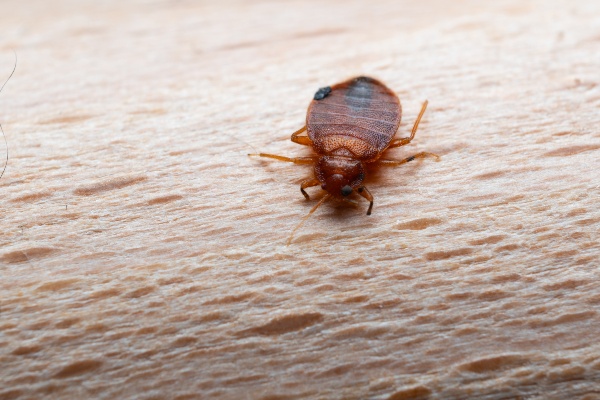
Itch mites, fleas, ticks, and German cockroach nymphs are all insects that can be mistaken for bed bugs. Whether the resemblance stems from similar bites and diets or shared physical characteristics, it can be difficult to confirm the presence of bed bugs as a result. So, how do bed bugs differ from these other pests?
Bed bugs vs. itch mites
Both bed bugs and scabies can cause skin irritation and are more active at night. Bed bugs are insects that feed on blood, while scabies is caused by microscopic itch mites that burrow into the skin. Bed bug bites typically occur on exposed areas of the body, while scabies rashes only develop in areas where the mites have burrowed.
Bed bugs vs. fleas
Bed bugs and fleas both feed on blood, cause skin irritation, and leave behind similar bite marks. With that in mind, what does a bed bug look like compared to a flea? A key difference is that bed bugs have flat bodies and cannot jump, while fleas have narrow bodies adapted for jumping.
Bed bugs vs. ticks
Bed bugs and ticks are both tiny, blood-feeding parasites that can bite humans and animals. However, ticks are arachnids with a more rounded body shape and are commonly found outdoors, while bed bugs are flat, oval-shaped insects that typically feed at night and are often found in indoor environments.
Bed bugs vs. German cockroach nymphs
Bed bugs are often confused with German cockroach nymphs because they are similar in size and color in their early stages, are attracted to human activity, hide in similar places, and are primarily nocturnal feeders. However, German cockroach nymphs have a more elongated, oval-shaped body compared to the wider, oval form of bed bugs. Another giveaway is the antennae. Bed bugs have short, stubby antennae, whereas German cockroach nymphs have long, thread-like antennae that are constantly moving.
What to do if you've identified bed bugs
Have you spotted bed bugs in your home? If you have, there are several immediate steps you can take:
- Vacuum any areas where you have seen bed bugs, including carpets, all sides of furniture, and mattress seams.
- Dispose of the vacuum bag or empty the canister into a sealed plastic bag immediately after vacuuming. A steamer is also an effective tool for killing bed bugs and their eggs on contact.
- Run bedding, clothing, and linens through the dryer on the highest heat setting to kill bed bugs and their eggs, and then launder items as usual.
- Contact a licensed pest control professional to remove bed bugs at all life stages.
Bed bugs are not easy pests to get rid of on your own. DIY attempts can worsen an infestation, and you must act quickly to prevent it from spreading. If you notice any signs of bed bugs, schedule an inspection with Terminix's expert technicians today. They will thoroughly inspect your home, create a tailored bed bug control plan, and help prevent them from returning.