Bug Facts
Beach spiders you might see in the sand
Let's look at some of the eight-legged creatures you might encounter on your next trip to the waters edge, whether it be lake, river or ocean.
Content Updated: September 3, 2025
If you're planning a trip to the beach this summer, you’re probably excited to take in the sun, sand, and waves. But while you're relaxing by the water, it’s worth remembering that beaches are part of the natural world, and that means sharing the space with a variety of wildlife, including beach spiders.
Let’s look at some of the spiders at the beach you might encounter on your next visit.
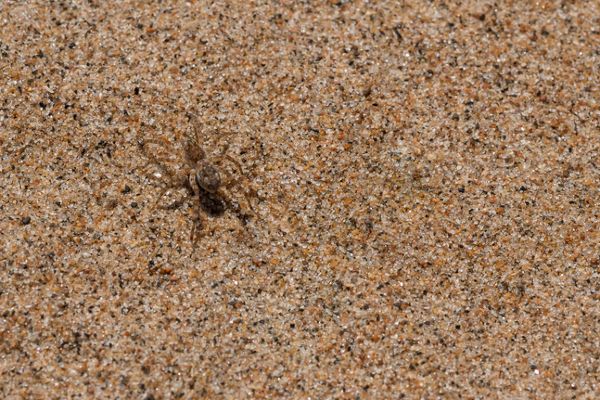
Beach wolf spiders
The beach wolf spider (Arctosa littoralis) is most commonly found near beaches but can also live in other habitats across the United States and southern Canada. These spiders are masters of camouflage, often hiding in sand or beneath driftwood during the day.
If you spot a beach wolf spider, you might be surprised by how quickly it moves. These small beach spiders are only around 7/16” to 9/16” long, or about the same size as a pencil eraser or dime. While their bite is venomous and may cause some pain or swelling, it’s not considered dangerous to humans. These beach spiders aren’t aggressive and usually only bite if they feel threatened.

Dock spiders (Fishing spiders)
Dock spiders, also known as fishing spiders (Dolomedes spp.), are semi-aquatic spiders native to North America. They’re not technically considered beach spiders as they typically live near docks, lakes, and streams. They hunt by resting their front legs on the water’s surface to detect vibrations from nearby prey. Occasionally, they may wander inland or into homes seeking warmth.
These spiders have leg spans up to three inches and are typically shades of brown, gray, or tan, marked with stripes or chevron patterns that help them blend into their surroundings. Dock spiders are not aggressive. They can bite if provoked, but their venom is generally harmless to humans, causing only mild pain and swelling similar to a bee sting.

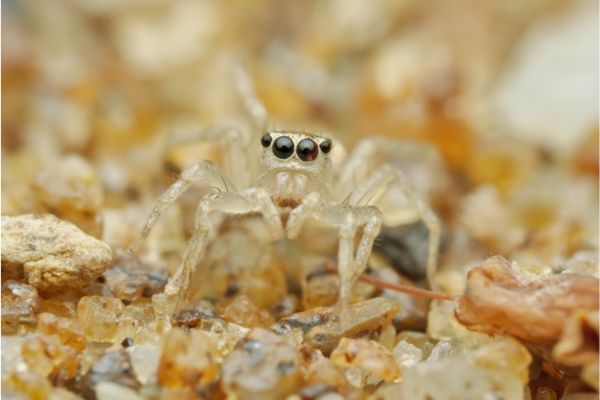
Beach jumping spiders
Beach jumping spiders (Terralonus californicus) are very small, about a quarter to a third of an inch long, about the size of a small pea. They live near sandy or grassy beach areas across the U.S. and southern Canada and are known for their quick, jerky movements and sharp eyesight.
Instead of webs, they hunt by jumping on their prey. These beach spiders are harmless to humans and rarely bite, but if they do, their bite is not dangerous.
Sea spiders
Sea spiders, or pycnogonids, are ocean-dwelling relatives of arachnids found in every ocean, from shallow waters to depths over 23,000 feet. Although they look similar to land spiders with their eight spindly legs, they’re a different class entirely. These carnivorous creatures feed on soft-bodied animals like sea sponges and coral.
Most sea spiders are small, around a quarter to half an inch across, but deep-sea and Arctic species can span up to a foot wide. Despite their eerie appearance, sea spiders don’t bite. One bizarre fact: they have claws that grow out of their brains, which truly sets them apart from their land-based cousins.

How to help keep beach spiders out of your home
Whether you're returning from a seaside vacation or live near the coast year-round, it's a good idea to take a few preventive steps to help keep various spiders, including beach spiders, from sneaking indoors.
To avoid bringing beach spiders home:
- Shake out towels, beach bags, and clothing before packing or entering your home.
- Inspect luggage and gear, especially if stored near docks or on the ground.
- Avoid leaving wet or sandy items in your car or garage for long periods.
- Store beach gear in sealed containers when not in use.
For beach and coastal home spider prevention:
- Use Terminix spider control services to help remove and prevent spider infestations in and around your home.
- Seal cracks and gaps around windows, doors, and foundations to block entry points.
- Use mesh screens on windows and vents to keep spiders (and other bugs) out.
- Reduce outdoor lighting at night to avoid attracting the insects that spiders prey on.
- Trim vegetation away from your home’s exterior to eliminate hiding spots.