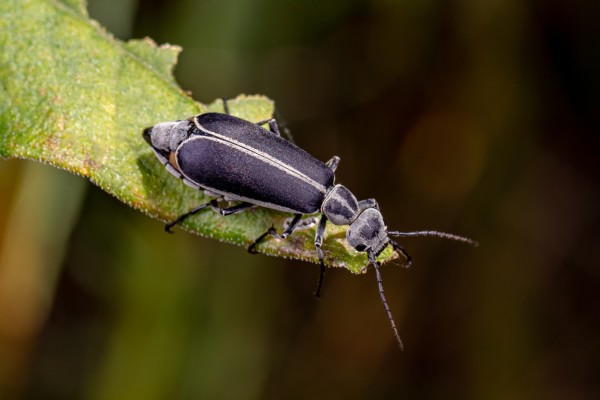
The margined blister beetle is defined by its deep black color and the thin, high-contrast white stripe that runs down its body. It’s also known as the ebony blister beetle.
Blister beetles (Meloidae)
Learn about blister beetles, garden bugs known for their blister-inducing bites.
Blister beetles are more than just your typical yard beetle. Consisting of over 7500 species worldwide, they’re capable of much more harm than your average garden-faring bug. From the blister-causing bites that inspired their name to their toxicity, here’s everything to know about blister beetles.
Jump to section:
Blister beetle identification
Blister beetles are insects from the biological family Meloidae. Because of the danger they can pose, it’s important to be able to pick them out of a crowd. Although different species of blister beetles can vary, there are a few key characteristics shared between all members of the Meloidae family:
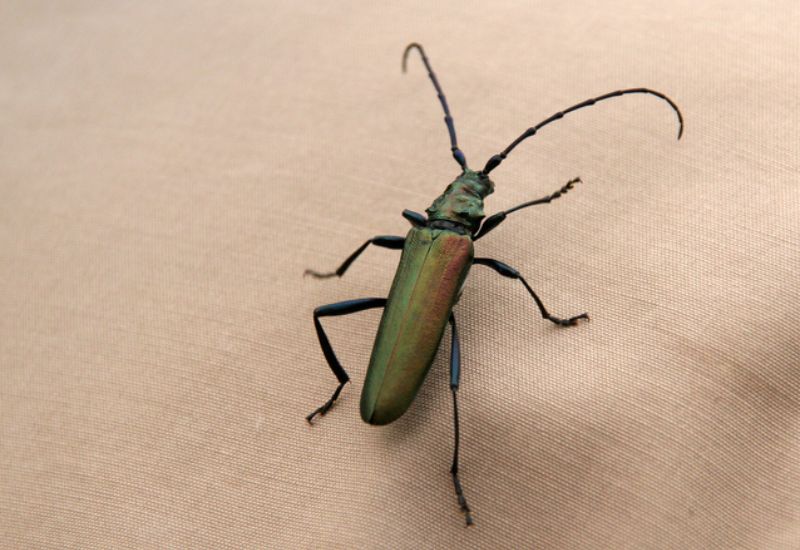
Body shape: Blister beetles are uniquely characterized by their narrow “neck”—a thorax that separates the head from the body, as well as their generally soft and elongated bodies.
Size: They can range in size from 0.39 inches up to 0.98 inches.
Cantharidin secretion: All blister beetles are known to secrete cantharidin, a toxic substance that causes the blistering they’re named after.
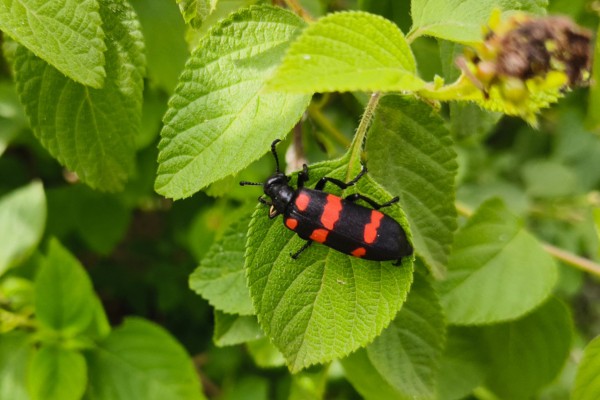
Coloration: They are often aposematically colored, meaning that they’re colored in a manner that advertises their toxicity. For blister beetles, this usually means conspicuous or bright colors or high contrast patterns.
The two species of blister beetle that are especially problematic in the US are the Epicauta funebris—the margined blister beetle, and the Epicauta vittata—the striped blister beetle.
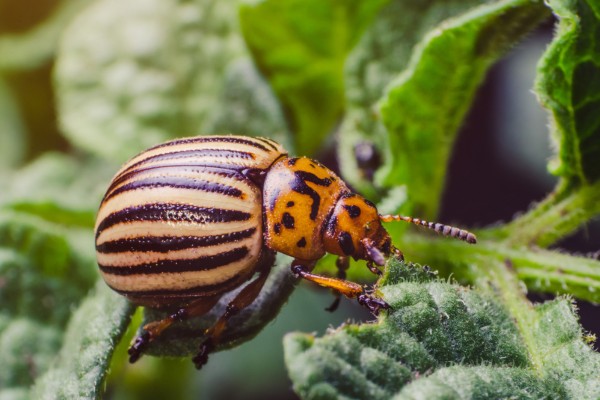
The striped blister beetle, also known as the old-fashioned potato beetle, has a similarly dark coloration, but this is instead paired with a yellow head and multiple yellow stripes
Are blister beetles dangerous?
Blister beetles can pose a serious risk. It’s important to be mindful of these insects, especially if you have a garden. On top of the damage they can cause to vegetation and crops due to their consumption of a wide variety of flora, blister beetles can also cause harm to humans, pets, and livestock.
Blister beetles produce a toxin called cantharidin. When a blister beetle bites, the presence of this substance is what causes the resulting ill effects. In humans, this typically causes minor side effects like skin irritation and blistering.
However, for many animals, accidentally ingesting blister beetles can cause gastrointestinal irritation, poisoning, or death. While horses are usually the most affected, you should continue to monitor your pet’s health for signs of blister beetle bites or consumption if you suspect something is wrong. Check for symptoms of poisoning such as:
Anorexia
Excessive salivation
A purple-blue line on the gums
Bloody urine or stools
If you notice these signs of poisoning, consult with a veterinarian or poison control right away for further instructions.
When it comes to homes and structures, blister beetles are as capable as any other insect when it comes to entering and invading homes, but their diet consisting mainly of plants means they’re unlikely to do so. They’re similarly unlikely to cause any structural damage the same way pests like termites or carpet beetles might.
Blister beetle habitats and behavior
Blister beetles are often found where grasshoppers or bees (their main source of food as larvae) are common. For the US, that means blister beetles can typically be found in the Eastern and Southern United States. They have also been seen in the West Indies as well as South and Central America.
Though blister beetles can be dangerous nuisances, they aren’t considered an invasive species because they don’t cause significant harm to the environment, the economy, or human health. Birds, reptiles, amphibians, and rodents are all known predators of blister beetles, and blister beetles, in turn, control grasshopper populations by feeding on their eggs.
According to North Carolina State, you’re most likely to see these pests from June to September with them being most prevalent in July.
Diet and feeding habits
When it comes to a blister beetle’s diet, there’s not a lot in your garden that they won’t eat. Blister beetle larvae primarily eat grasshopper eggs, but you can find adult blister beetles munching on flowers such as:
Amaranth
Nightshade
Dandelions
Sunflowers
Chrysanthemums
Alfalfa
Acacia
It's not just flowers that they'll eat, though. Blister beetles are also known to eat a variety of crop plants, including, but not limited to:
Beans
Tomatoes
Potatoes
Eggplants
Peppers
Carrot
Cabbages
Corn
Peas
Radish
According to the University of Florida, most blister beetle adults eat only the floral parts of the plants, but they may also eat the leaves on occasion. It is their expansive feeding habits that can cause trouble for homeowners.
Life cycle and reproduction
The specifics of a blister beetle’s life cycle are dependent on its species, though it can also be influenced by their environment. However, most blister beetles have four main stages of life:
Egg: Adults begin laying eggs in spring, and they hatch after around two weeks. A mated female produces eggs about every 10 days, and they can lay anywhere from 100 to 200 eggs at a time.
Larval stage: When the eggs hatch, the larvae begin to seek out grasshopper eggs to eat. Some species of blister beetle larvae will attach themselves to bees instead.
Pupae stage: When blister beetle larvae pupate, their bodies begin to transform into their adult form.
Adult: For humans, the only truly problematic phase is the adult stage. Adult blister beetles feed on plants, and their toxic secretion can pose a threat to livestock and pets.
Blister beetles are unique in that they undergo hypermetamorphosis—their larval stage is functionally and visibly distinct from their subsequent stages. Females can lay multiple clusters of eggs throughout their lives.
Generally, a blister beetle lives for 3-5 months, but it’s possible for them to complete an entire life cycle in just 30 days or to live for up to three years, depending on their circumstances.
What should I do if I see a blister beetle?
If you see a blister beetle on your property, be sure to remove it as soon as you spot it—but never do so barehanded. Always wear gloves when handling blister beetles. Additionally, you should do your best to ensure that it does not get crushed, as that can spread its toxic secretions.
On that note, if you get bitten by a blister beetle, you should:
Use soapy water to gently remove it.
Clean the area with soap and water to prevent infection.
Apply cold packs to reduce swelling and provide temporary relief from pain.
Seek medical attention in severe cases, such as if it gets in your eyes or if it is swallowed.
If you, your pet, or anyone you know has swallowed a blister beetle, you need to call poison control as soon as possible at 1-800-222-1222. If cantharidin gets in your eye, see an eye doctor right away for an evaluation and treatment recommendations.
When it comes to keeping blister beetles away from your property, some precautions you can take include:
Keeping grass and weeds trimmed
Using row covers
Encouraging birds to visit
Getting rid of grasshoppers
Monitoring your property and gardens
Prevention starts with proper blister beetle identification. If you have a serious pest problem, it’s best to consult a pest management professional to help determine the exact species. This can help determine the most appropriate treatment for your infestation. Terminix offers thorough and effective pest identification and control services—let us help you keep your home yours.